Home » Hawaiian Native Plant Collection » Koki‘o, Hau hele ‘ula (Kokia drynarioides)
Koki‘o, Hau hele ‘ula (Kokia drynarioides)
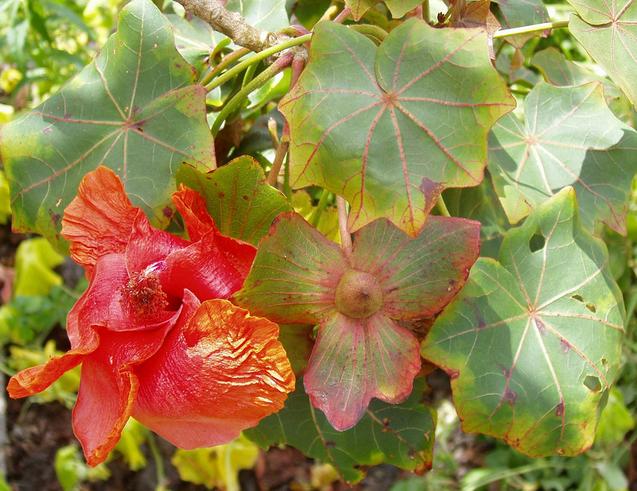
Photo courtesy of Jupiter Nielsen
Hawaiian name: Kokiʻo, Hau hele ʻula
Botanical name: Kokia drynarioides
Family: Malvaceae (Mallow Family)
Status: Endemic, Endangered
Where found: Hawai‘i H (Pu`uwa`awa`a and Hu`ehu`e in North Kona)
Water/Light: Dry, full sun
Elevation Range in the wild: 1,500 to 2,600 feet
Height: 26 feet
There are four endemic Kokia species in Hawai‘i; three are seriously endangered and one is extinct. This species from Hawaiʻi island is a success story. Although there are still very few wild plants, there are now hundreds of outplanted trees in protected natural areas, and many more in cultivation. A single tree is capable of producing viable seeds without native pollinators and even in isolation. The trees are gorgeous, especially in bloom, with hundreds of sturdy scarlet flowers that can reach nine inches across. These flowers were bird pollinated, but the large honeycreeper family birds that relied on the nectar of these flowers are now extinct. It is said that one flower can produce up to a liter of nectar in its lifetime, which has been shown to be highly nutritious. The calyxes are valued for lei making and wreaths, and red to purple dyes were made from the bark and flowers. Kokiʻo can be difficult to grow, needing well drained, fertile soil; full sun but some wind and sun protection early in life; and possibly prefers rural areas to urban ones (Koebele and Eickhoff, Native Plants in Hawaiʻi). However, this species has been successfully grown at lower elevations than where it is naturally found.
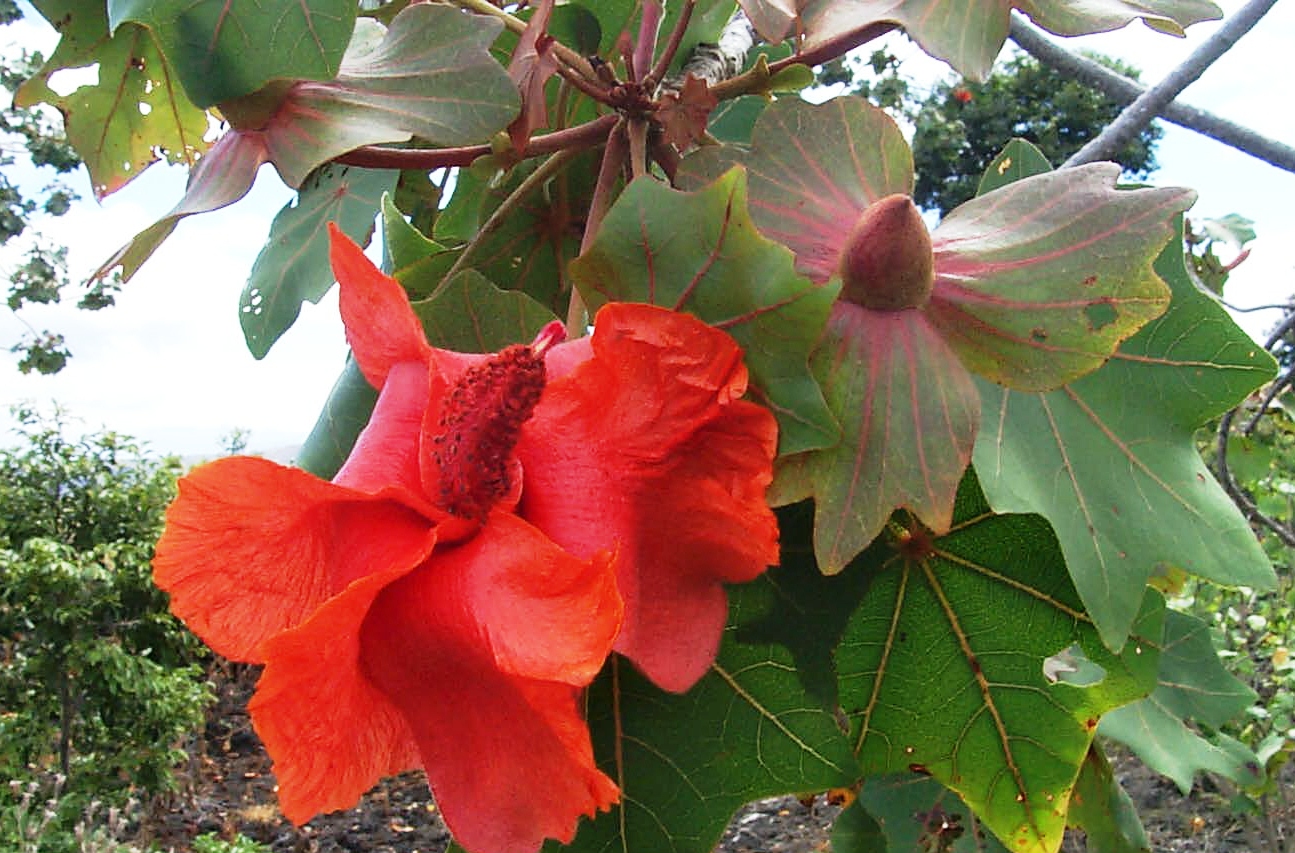
Photo credit: MNBG
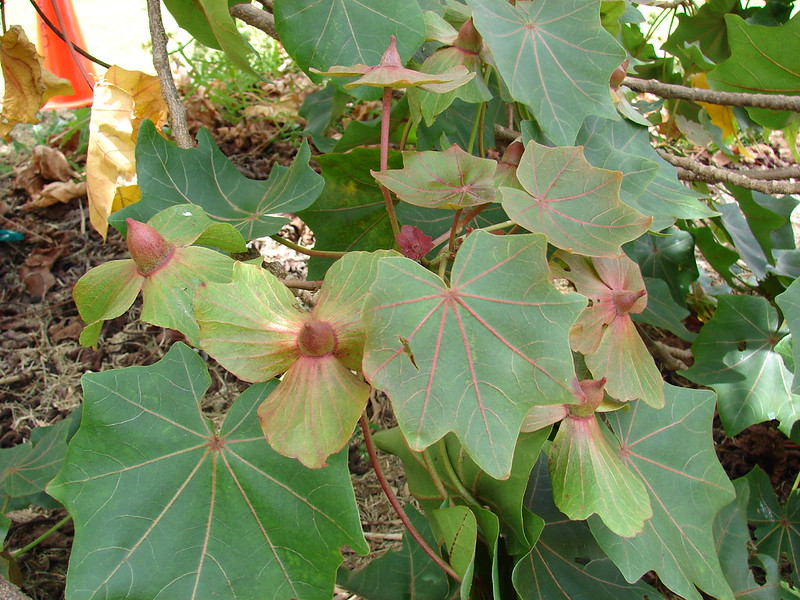
Photo credit: Forest and Kim Starr
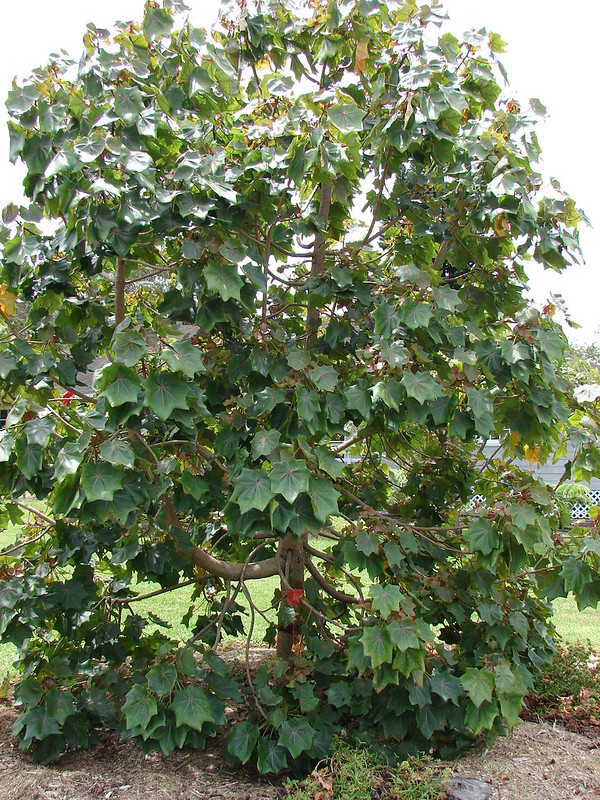
Photo credit: Forest and Kim Starr
Please Consider
Making a Donation

Plants from the MNBG Collection:
-
- ‘A‘ali‘i (Dodonaea viscosa)
- ‘Āhinahina (Achyranthes splendens var. splendens)
- ‘Āhinahina (Artemisia mauiensis)
- ‘Ākala (Rubus hawaiensis)
- ‘Ākia (Wikstroemia uva-ursi var. uva-ursi)
- ‘Akoko (Euphorbia degeneri)
- Alahe'e (Psydrax odorata)
- ‘Ānapanapa (Colubrina asiatica)
- ‘Awa (Piper methysticum)
- Delissea rhytidosperma
- Hāhā (haha) (Cyanea magnicalyx)
- Hala (Pandanus tectorius)
- Hala pepe (Dracaena auwahiensis)
- Hau (Hibiscus tileaceus)
- Hau hele wai (‘Akiohala) (Hibiscus furcellatus)
- Hao (Rauvolfia sandwicensis)
- Hō‘awa (Pittosporum glabrum)
- Hōʻawa (Pittosporum halophilum)
- Hō‘awa (Pittosporum hosmeri)
- ‘Iliahi (Santalum haleakalae)
- ‘Iliahialo‘e (Santalum ellipticum)
- ʻIlima papa (Sida fallax)
- Kalo, (Colocasia esculenta)
- Kamani (Callophyllum inophyllum)
- Ka palupalu o Kanaloa (Kanaloa kahoolawensis)
- Kauila (Colubrina oppositifolia)
- Kauila (O‘a) (Alphitonia ponderosa)
- Keahi (Sideroxylon polynesicum)
- Kī (Cordyline fruticosa)
- Koa (Acacia koa)
- Koai‘a (Acacia koaia)
- Koki‘o, Hau hele ‘ula (Kokia drynarioides)
- Koki‘o ke‘o ke‘o (Hibiscus arnottianus)
- Koki‘o ke‘oke‘o (Hibiscus arnottianus subsp. immaculatus)
- Koki‘o ‘ula‘ula (Hibiscus kokio ssp. kokio)
- Koki‘o ‘ula‘ula (Hibiscus kokio ssp. saintjohnnianus)
- Koki‘o ke‘o ke‘o (Hibiscus waimeae ssp. waimeae)
- Kou (Cordia subcordata)
- Kukui (Aleurites moluccana)
- Loulu lelo (Pritchardia hillebrandii)
- Loulu (Pritchardia remota)
- Maʻo (Gossypium tomentosum)
- Ma‘o hau hele (Hibiscus brackenridgei)
- Māmaki (Pipturus albidus)
- Mau‘u lā‘ili (Sisyrinchium acre)
- Mehame, Hame (Antidesma platyphyllum var. platyphyllum)
- Milo (Thespesia populnea)
- Naio (Myoporum sandwicense)
- Nānū (Gardenia brighamii)
- Ōhai (Sesbania tomentosa)
- ʻŌhiʻa ʻai (Syzygium malaccense)
- ‘Ōhia lehua (Metrosideros polymorpha)
- Pōhinahina (Vitex rotundifolia)
- Pōkalakala (Polyscias racemosa)
- ‘Uala (Sweet Potato)
- ‘Uki ‘uki (Dianella sandwicensis)
- ʻUlu cv. ‘Maʻafala’(Artocarpus altilis)
- Wauke (Broussonetia papyrifera)
- Wiliwili (Erythrina sandwicensis)
