‘Akoko (Euphorbia degeneri)
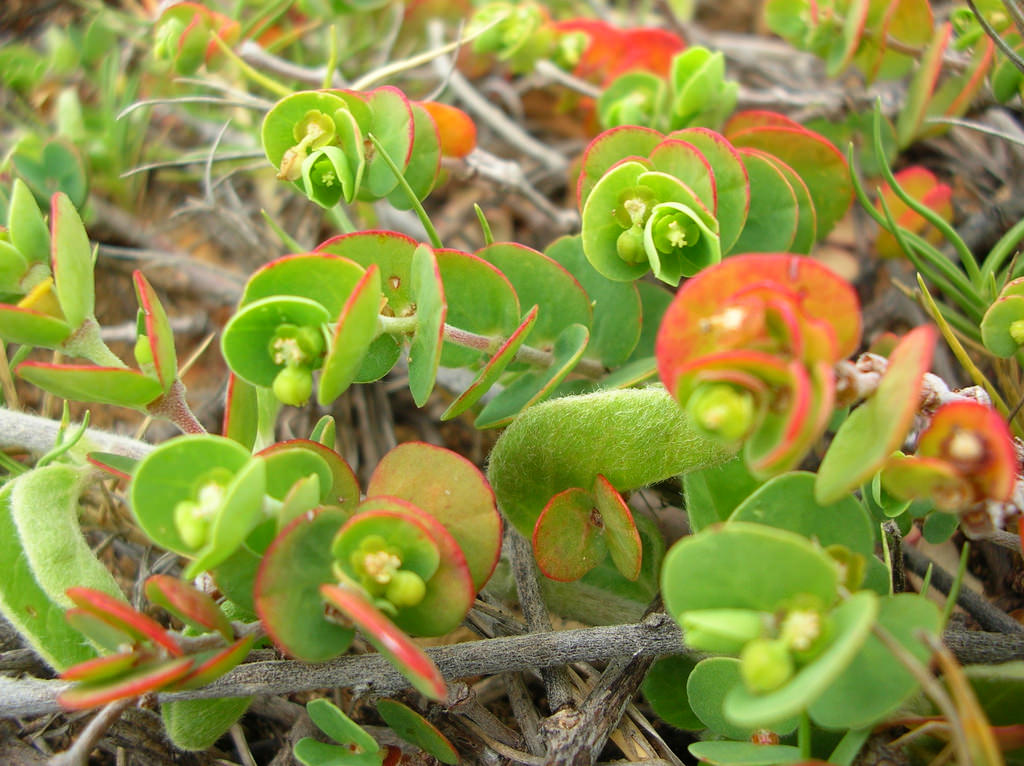
Photo courtesy of Forest & Kim Starr
Hawaiian name: ‘Akoko
Botanical name: Euphorbia degeneri
Family: Euphorbiaceae (Poinsettia family)
Status: Endemic
Where found: Maui, Moloka‘i, Hawai‘i, O‘ahu, Ni‘ihau & Kaua‘i
Water/Light: Dry, with full sun
Elevation range: 0 to 150 feet
Height: up to 1 foot, with an up to 2 foot spread
There are seventeen native species of ‘akoko; all of which are native to the Hawaiian Islands. They do best in dry and even windy environments; do not overwater. The name ‘akoko comes from the Hawaiian word "koko,” which means blood; referring to the red seed capsules appearing like drops of blood on its leaves. This deep red color develops only in very bright, and dry conditions. In lāʻau lapaʻau (Hawaiian medicine), ‘akoko is mixed with other plants for treatments of kohepopo and wai‘opua hinanawe (women’s weakness and debilitation). Other names for this plant are koko, kōkōmālei, and ʻekoko.
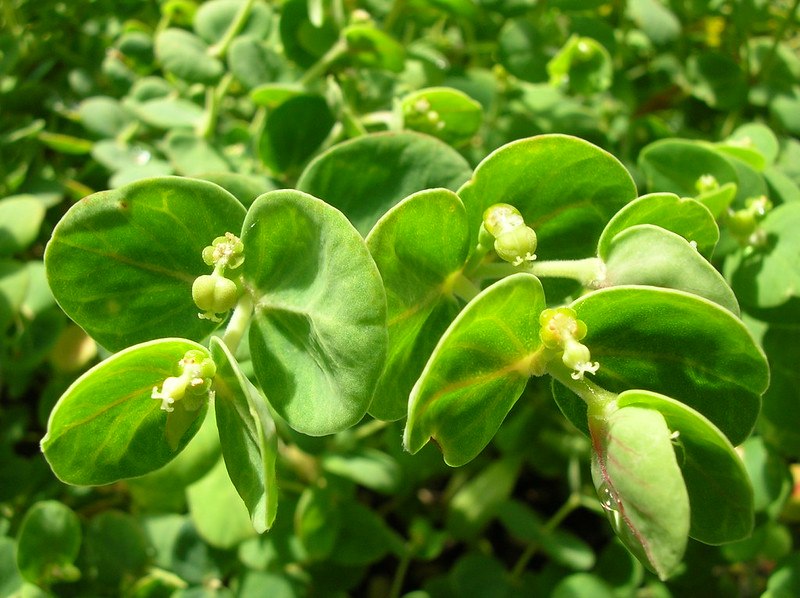
Photo credit: Forest and Kim Starr
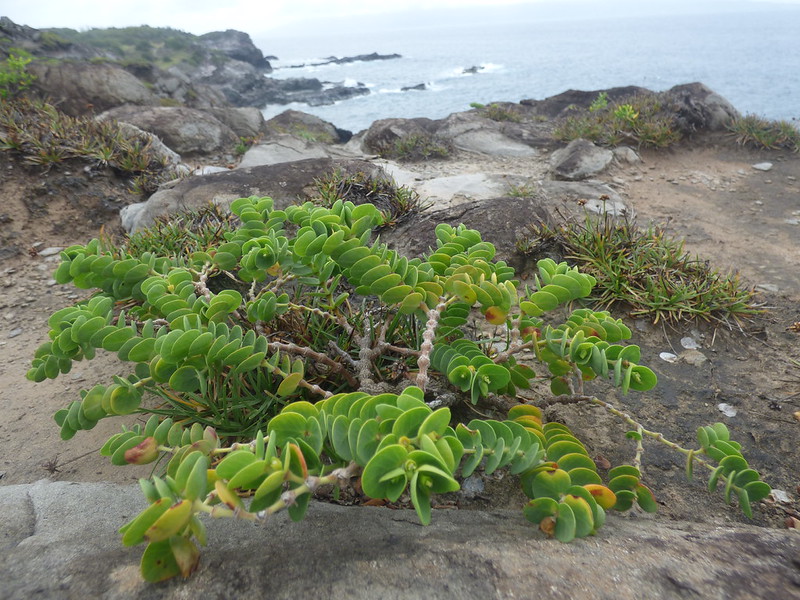
Photo credit: Forest and Kim Starr
Location
The Garden is located at 150 Kanaloa Avenue in Kahului, Maui, right across from the War Memorial Stadium.
(808) 249-2798
Hours of Operation
Tuesday through Saturday,
8:00 a.m. – 4:00 p.m.
Closed occasionally for inclement weather and Hawaii State Holidays.
Admission
Members: Free
General: $10
Keiki Under 12: Free
Kama'aina: Free
(with Hawai'i ID)
Plants from the MNBG Collection:
- ‘A‘ali‘i (Dodonaea viscosa)
- ‘Āhinahina (Achyranthes splendens var. splendens)
- ‘Āhinahina (Artemisia mauiensis)
- ‘Ākala (Rubus hawaiensis)
- ‘Ākia (Wikstroemia uva-ursi var. uva-ursi)
- ‘Akoko (Euphorbia degeneri)
- Alahe'e (Psydrax odorata)
- ‘Ānapanapa (Colubrina asiatica)
- ‘Awa (Piper methysticum)
- Hala (Pandanus tectorius)
- Hala pepe (Dracaena auwahiensis)
- Hau (Hibiscus tileaceus)
- Hau hele wai (‘Akiohala) (Hibiscus furcellatus)
- Hao (Rauvolfia sandwicensis)
- Hō‘awa (Pittosporum glabrum)
- Hō‘awa (Pittosporum hosmeri)
- ‘Iliahi (Santalum haleakalae)
- ʻIlima papa (Sida fallax)
- Kalo, (Colocasia esculenta)
- Kamani (Callophyllum inophyllum)
- Koa (Acacia koa)
- Koai‘a (Acacia koaia)
- Koki‘a, Hau hele ‘ula (Kokia drynarioides)
- Koki‘o ke‘o ke‘o (Hibiscus arnottianus subsp. arnottianus)
- Koki‘o ke‘oke‘o (Hibiscus arnottianus subsp. immaculatus)
- Koki‘o ‘ula‘ula (Hibiscus kokio ssp. kokio)
- Koki‘o ‘ula‘ula (Hibiscus kokio ssp. saintjohnnianus)
- Koki‘o ke‘o ke‘o (Hibiscus waimeae ssp. waimeae)
- Kou (Cordia subcordata)
- Kukui (Aleurites moluccana)
- Loulu lelo (Pritchardia hillebrandii)
- Loulu (Pritchardia remota)
- Maʻo (Gossypium tomentosum)
- Ma‘o hau hele (Hibiscus brackenridgei)
- Māmaki (Pipturus albidus)
- Mau‘u lā‘ili (Sisyrinchium acre)
- Mehame, Hame (Antidesma platyphyllum var. platyphyllum)
- Milo (Thespesia populnea)
- Naio (Myoporum sandwicense)
- Nānū (Gardenia brighamii)
- Ōhai (Sesbania tomentosa)
- ʻŌhiʻa ʻai (Syzygium malaccense)
- ‘Ōhia lehua (Metrosideros polymorpha)
- Pōhinahina (Vitex rotundifolia)
- Pōkalakala (Polyscias racemosa)
- ‘Uala (Sweet Potato)
- ‘Uki ‘uki (Dianella sandwicensis)
- ʻUlu cv. ‘Maʻafala’(Artocarpus altilis)
- Wauke (Broussonetia papyrifera)
- Wiliwili (Erythrina sandwicensis)
