‘Ōhiʻa lehua (Metrosideros polymorpha)
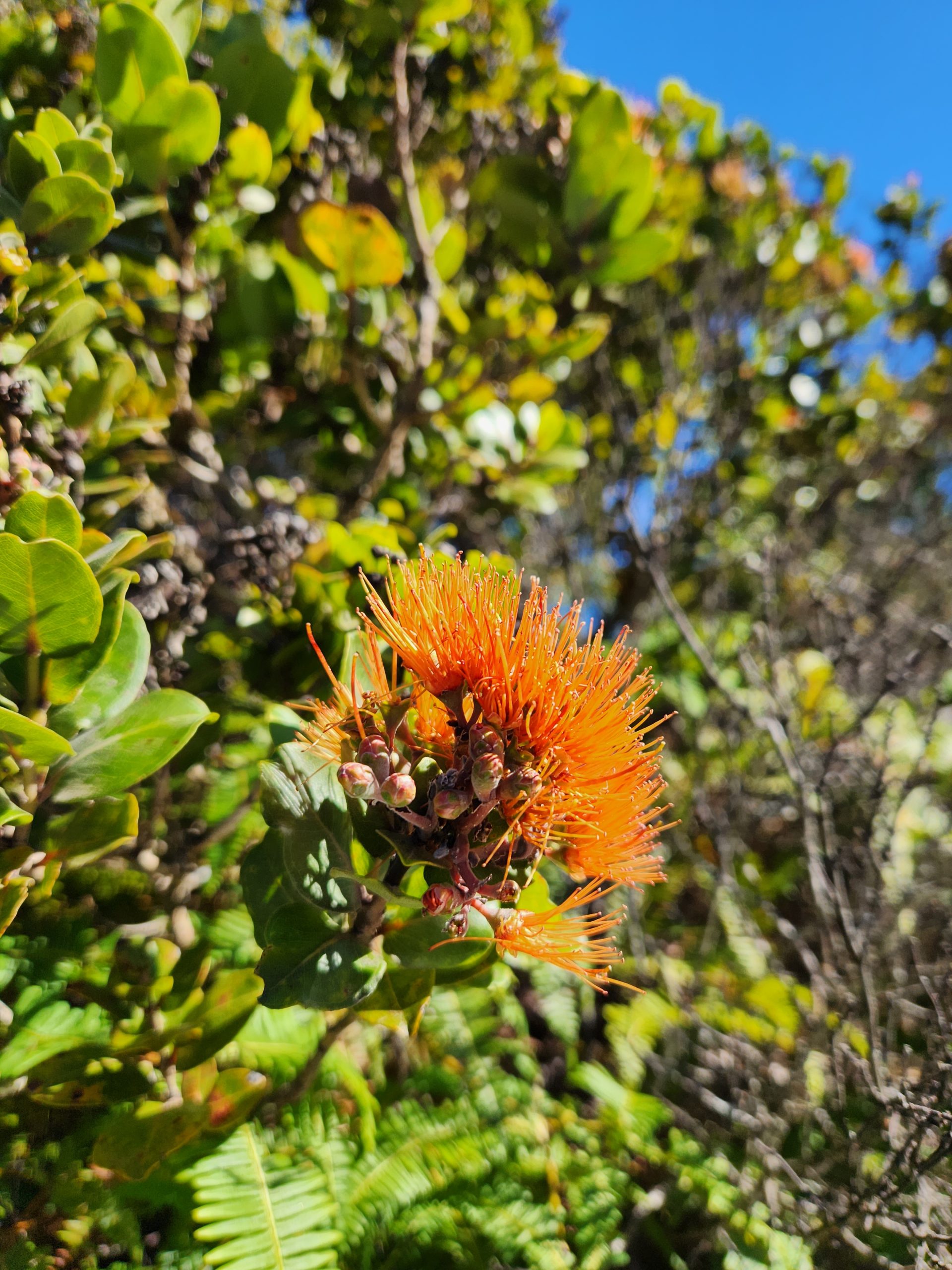
Photo courtesy of Emmely Cabacungan
Hawaiian name: ‘Ōhi‘a lehua
Botanical name: Metrosideros polymorpha
Family: Myrataceae (Myrtle family)
Status: Endemic
Where found: Mid to high elevations on all main islands except Ni‘ihau and Kaho‘olawe
Water/Light: Mesic to wet, full sun to part shade
Elevation range: 0 to 7,200 feet
Height: Variable
‘Ōlelo Noeau [PUKUI]: I mohala no ka lehua i ke ke‘eke‘ehi ‘ia e ka ua.
Translation: Lehua blossoms unfold because the rains tread upon them.
Meaning: Gentle words bring forth much that is desired.
Probably no other native Hawaiian plant is found in a greater number of varieties than ‘ōhi‘a lehua. The beautiful flowers, of many colors, are an important food source for Hawai‘i’s native birds. Early Hawaiians fashioned this exceptional wood into numerous items including kapa beaters, poi boards and kāhili poles. Medicinally, early Hawaiians mixed ‘ōhi‘a lehua flowers with other plants to ease the pains of childbirth and to stimulate the appetite and digestion of a weakened child. ‘Ōhi‘a lehua flowers and the liko (new leaves) are as prized for lei making today, as much as they were in ancient times . ‘Ōhi‘a lehua is drought and wind tolerant.
A newly identified disease has killed large numbers of mature ʻōhiʻa trees in forests and residential areas of the Puna and Hilo Districts of Hawaiʻi Island. Learn more about rapid ʻōhiʻa death here.
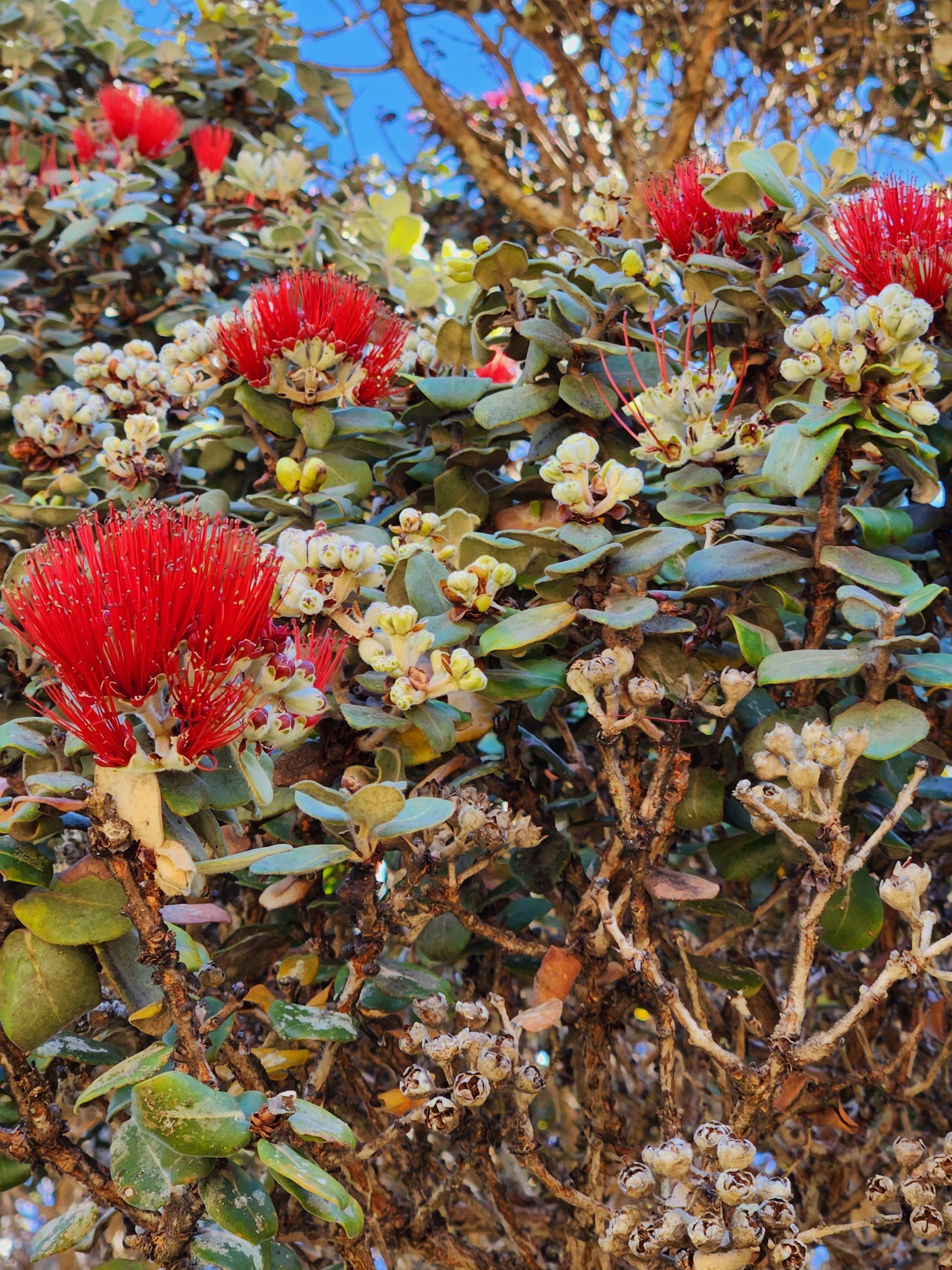
Photo credit: Emmely Cabacungan
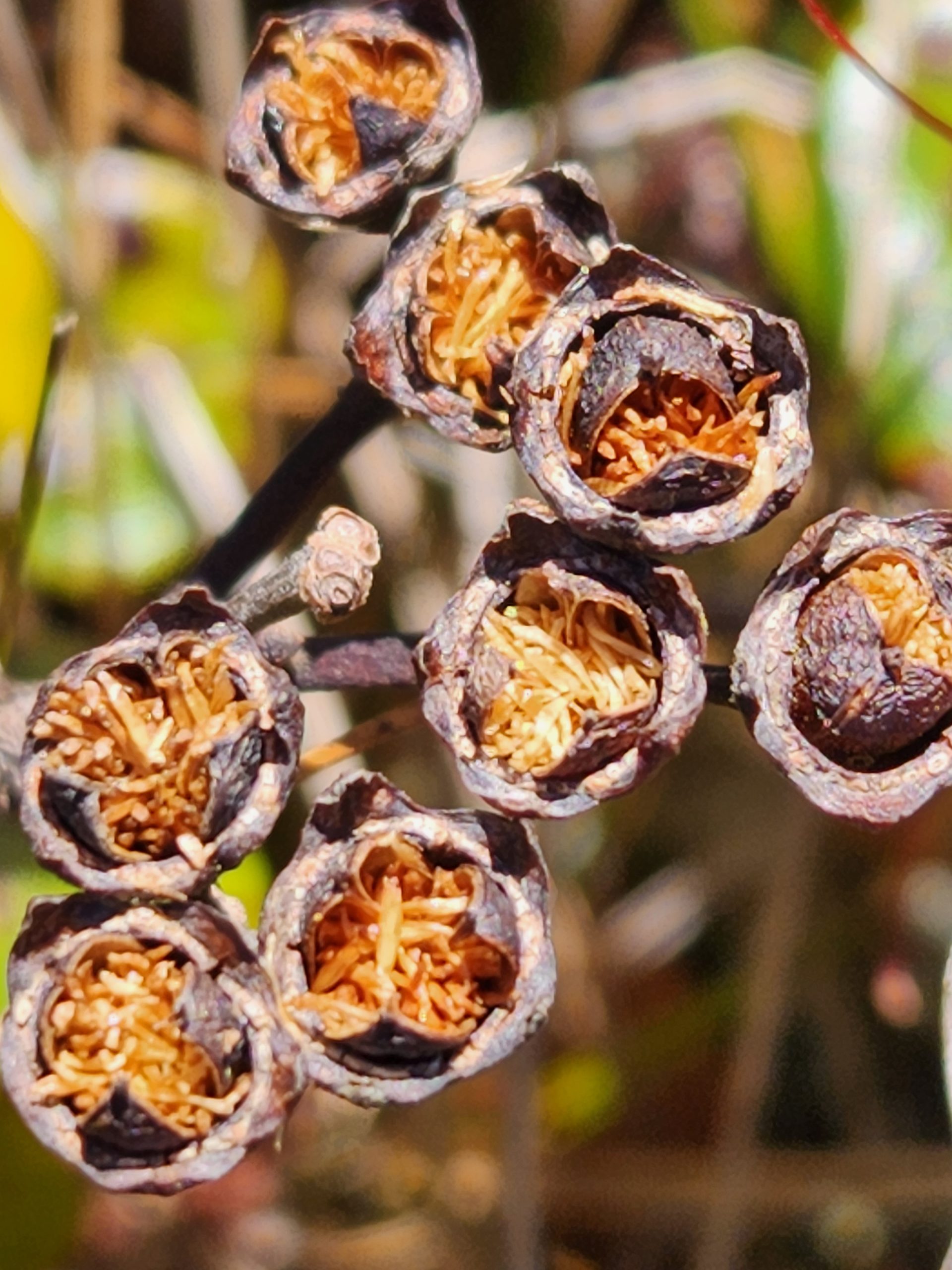
Photo credit: Emmely Cabacungan
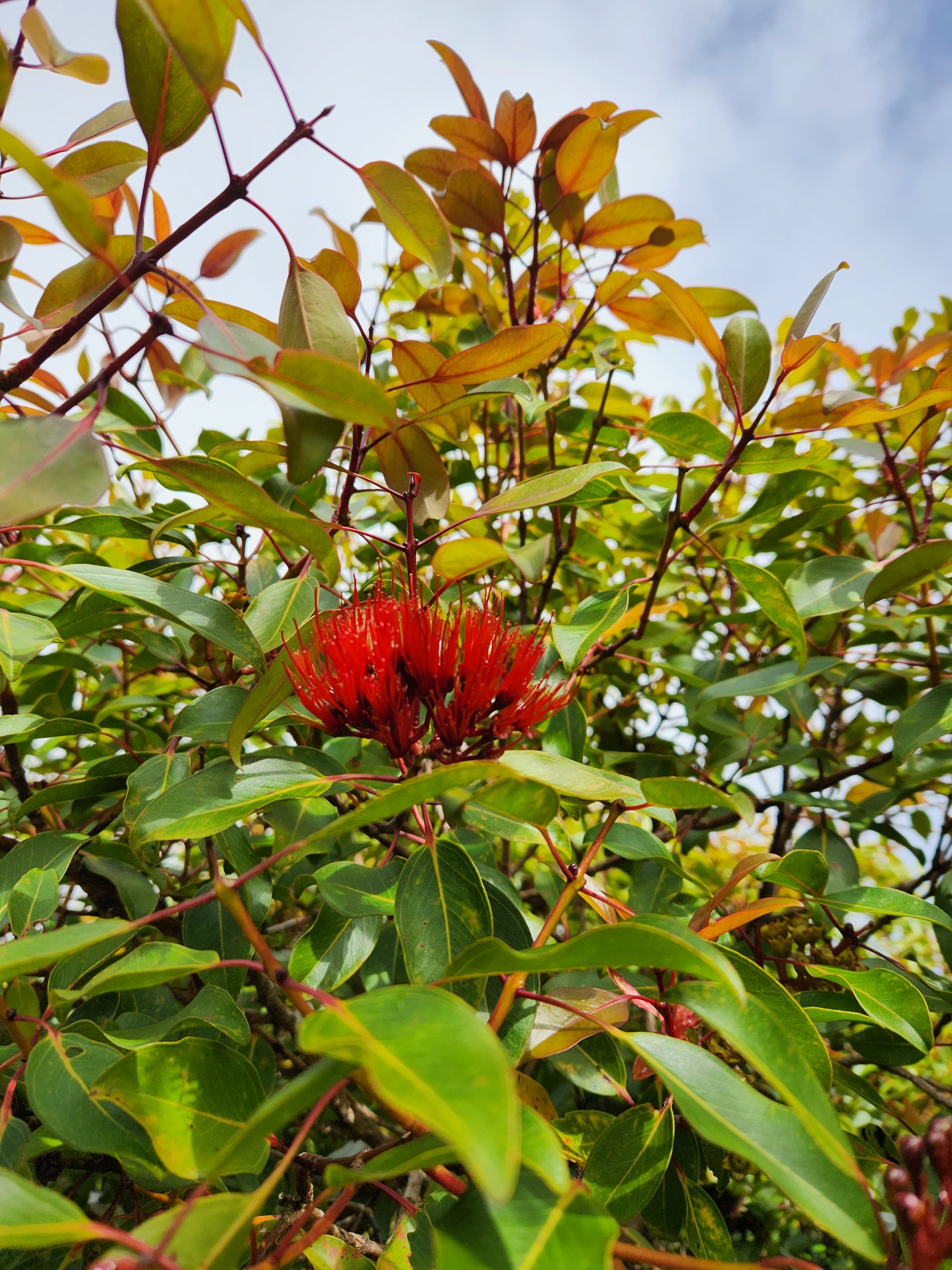
Photo credit: Emmely Cabacungan
Please Consider
Making a Donation

Plants from the MNBG Collection:
- ‘A‘ali‘i (Dodonaea viscosa)
- ‘Āhinahina (Achyranthes splendens var. splendens)
- ‘Āhinahina (Artemisia mauiensis)
- ‘Ākala (Rubus hawaiensis)
- ‘Ākia (Wikstroemia uva-ursi var. uva-ursi)
- ‘Akoko (Euphorbia degeneri)
- Alahe'e (Psydrax odorata)
- ‘Ānapanapa (Colubrina asiatica)
- ‘Awa (Piper methysticum)
- Hala (Pandanus tectorius)
- Hala pepe (Dracaena auwahiensis)
- Hau (Hibiscus tileaceus)
- Hau hele wai (‘Akiohala) (Hibiscus furcellatus)
- Hao (Rauvolfia sandwicensis)
- Hō‘awa (Pittosporum glabrum)
- Hō‘awa (Pittosporum hosmeri)
- ‘Iliahi (Santalum haleakalae)
- ʻIlima papa (Sida fallax)
- Kalo, (Colocasia esculenta)
- Kamani (Callophyllum inophyllum)
- Koa (Acacia koa)
- Koai‘a (Acacia koaia)
- Koki‘a, Hau hele ‘ula (Kokia drynarioides)
- Koki‘o ke‘o ke‘o (Hibiscus arnottianus subsp. arnottianus)
- Koki‘o ke‘oke‘o (Hibiscus arnottianus subsp. immaculatus)
- Koki‘o ‘ula‘ula (Hibiscus kokio ssp. kokio)
- Koki‘o ‘ula‘ula (Hibiscus kokio ssp. saintjohnnianus)
- Koki‘o ke‘o ke‘o (Hibiscus waimeae ssp. waimeae)
- Kou (Cordia subcordata)
- Kukui (Aleurites moluccana)
- Loulu lelo (Pritchardia hillebrandii)
- Loulu (Pritchardia remota)
- Maʻo (Gossypium tomentosum)
- Ma‘o hau hele (Hibiscus brackenridgei)
- Māmaki (Pipturus albidus)
- Mau‘u lā‘ili (Sisyrinchium acre)
- Mehame, Hame (Antidesma platyphyllum var. platyphyllum)
- Milo (Thespesia populnea)
- Naio (Myoporum sandwicense)
- Nānū (Gardenia brighamii)
- Ōhai (Sesbania tomentosa)
- ʻŌhiʻa ʻai (Syzygium malaccense)
- ‘Ōhia lehua (Metrosideros polymorpha)
- Pōhinahina (Vitex rotundifolia)
- Pōkalakala (Polyscias racemosa)
- ‘Uala (Sweet Potato)
- ‘Uki ‘uki (Dianella sandwicensis)
- ʻUlu cv. ‘Maʻafala’(Artocarpus altilis)
- Wauke (Broussonetia papyrifera)
- Wiliwili (Erythrina sandwicensis)
