
Home » Hawaiian Native Plant Collection » Koa (Acacia koa)
Koa (Acacia koa)
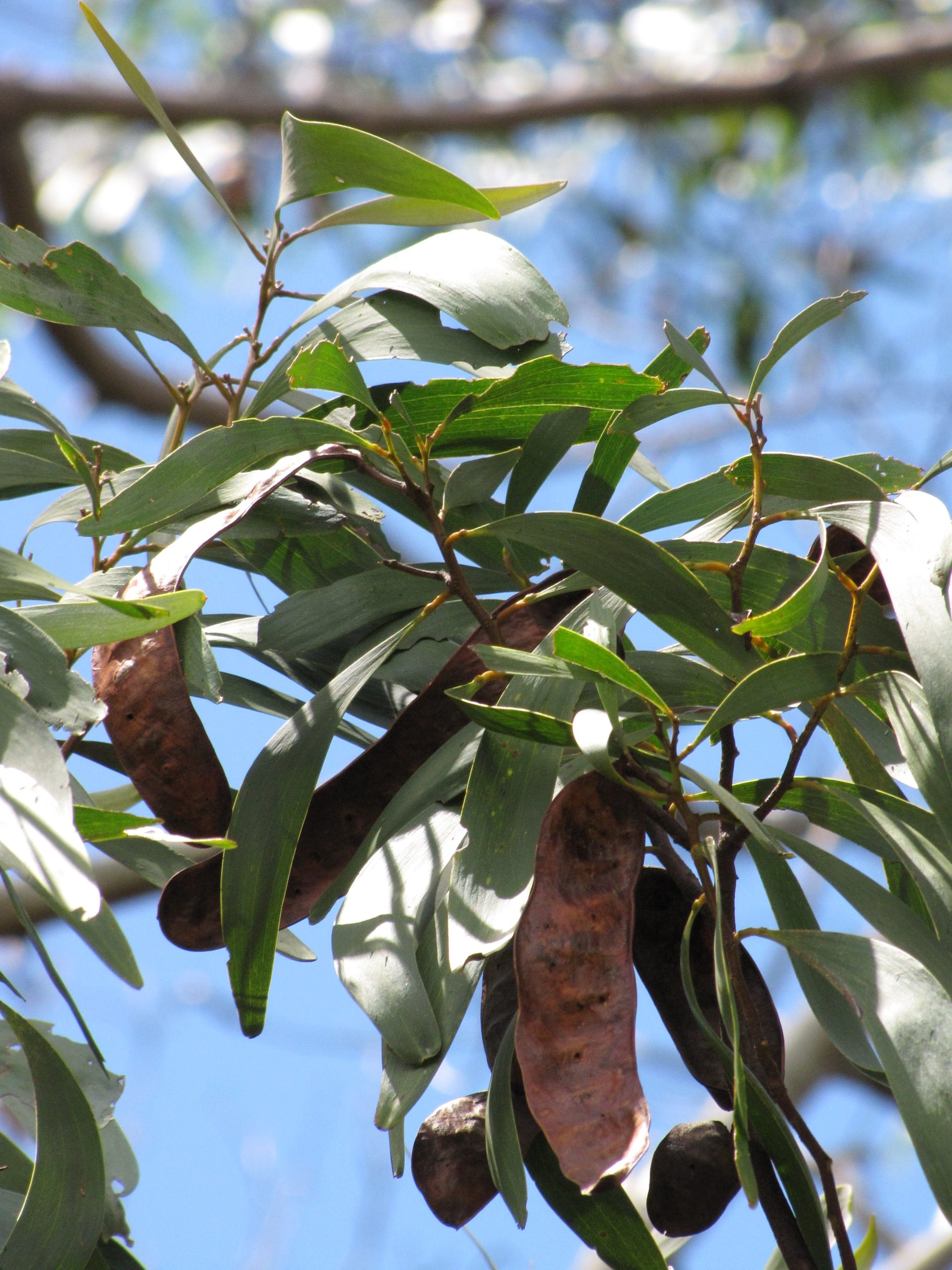
Photo courtesy of Forest & Kim Starr
Hawaiian name: Koa
Botanical name: Acacia koa
Family: Fabaceae (Pea Family)
Status: Endemic
Where found: Maui, Moloka‘i, Lāna‘i, Hawai‘i, O‘ahu & Kaua‘i HI exc. Ni, Ka
Water/Light: Dry, with full to partial sunlight
Elevation range: 200 to 6,760 feet
Height: up to 115 feet, more commonly 50 feet, 50 foot spread
Koa are fast growing trees, especially when young, and can reach impressive heights in old growth forest. In Hawaiian, koa means "brave, bold, and fearless." Early Hawaiians carefully crafted large koa trunks into wa‘a (canoes). Koa wood was also used in home construction and to make spears, paddles, kahili handles, and ‘umeke lā‘au (calabashes or bowls). The bark was used as a dye to stain kapa (cloth) a red color. In lāʻau lapaʻau (Hawaiian medicine), young koa leaves were used to ease cramps or fevers. Koa is drought and wind tolerant, but does not tolerate salt or shade. Like its smaller statured cousin, koaiʻa, there are differences between the genetics of populations on each island and it is best to plant from within your island. For example, Maui koa have long, slim leaves compared to the wide-leaved trees that grow naturally on Hawaiʻi island. “Both koaiʻa and koa have a symbiotic relationship with a nitrogen-fixing bacterium called Bradyrhizobium in their roots that helps the tree grow and fertilize the surrounding soil. These bacteria produce an ammonia-like fragrance that emerges from the soil surrounding the tree.” - Bruce P Koebele from Native Hawaiian Garden. Koa wilt is common here, especially in wet low elevation areas, but there are Maui sourced, wilt resistant trees that can be obtained from the Hawaii Agriculture Research Center on Oahu.
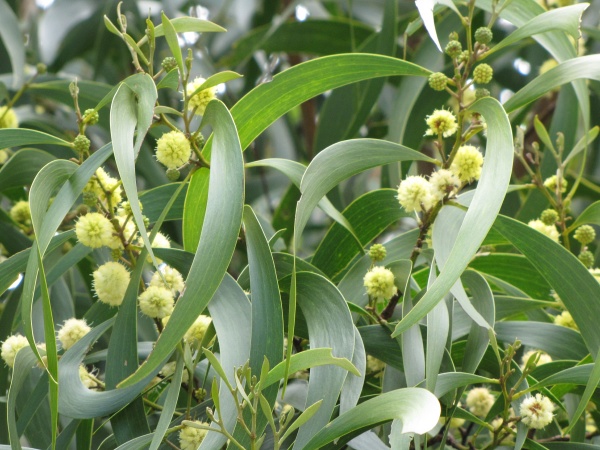
Photo credit: Forest and Kim Starr
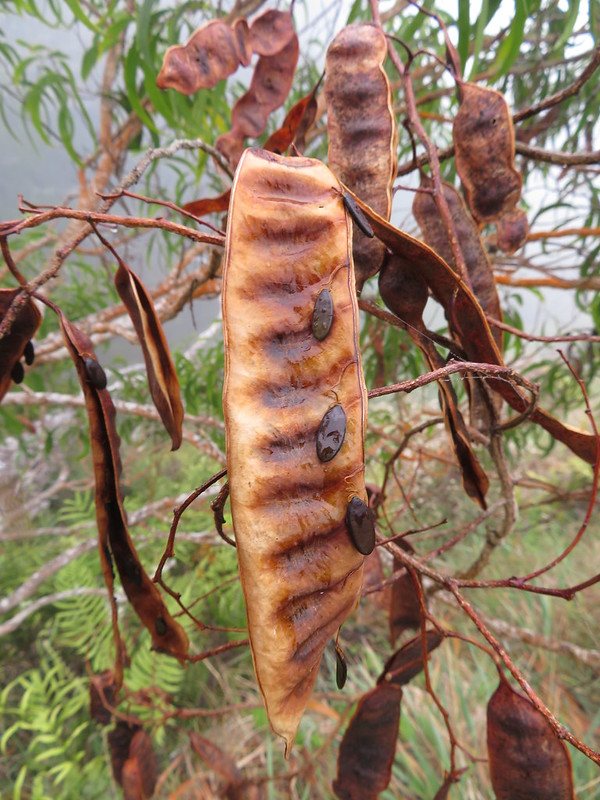
Photo credit: MNBG
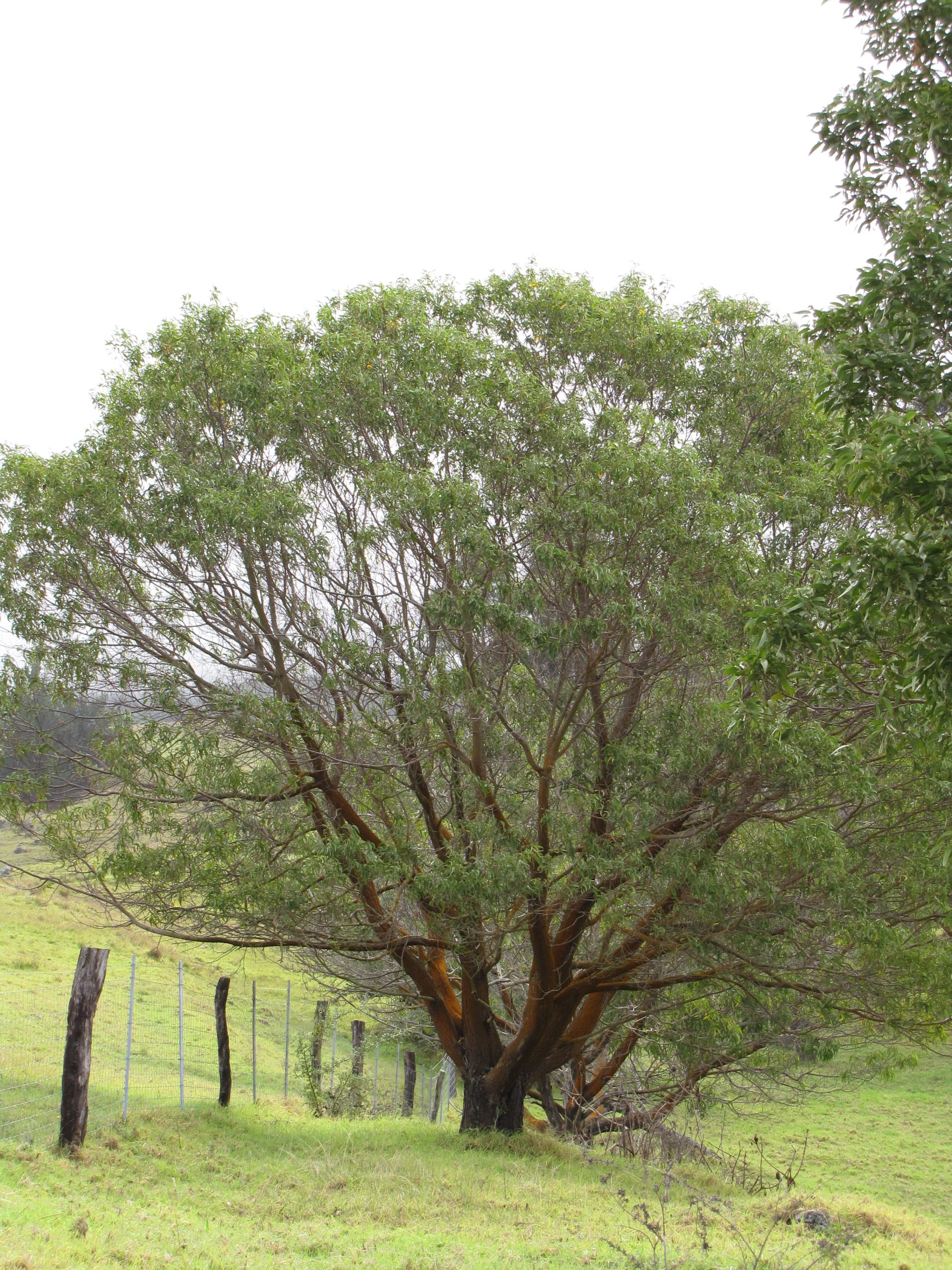
Photo credit: Forest and Kim Starr
Please Consider
Making a Donation

Plants from the MNBG Collection:
-
- ‘A‘ali‘i (Dodonaea viscosa)
- ‘Āhinahina (Achyranthes splendens var. splendens)
- ‘Āhinahina (Artemisia mauiensis)
- ‘Ākala (Rubus hawaiensis)
- ‘Ākia (Wikstroemia uva-ursi var. uva-ursi)
- ‘Akoko (Euphorbia degeneri)
- Alahe'e (Psydrax odorata)
- ‘Ānapanapa (Colubrina asiatica)
- ‘Awa (Piper methysticum)
- Delissea rhytidosperma
- Hāhā (haha) (Cyanea magnicalyx)
- Hala (Pandanus tectorius)
- Hala pepe (Dracaena auwahiensis)
- Hau (Hibiscus tileaceus)
- Hau hele wai (‘Akiohala) (Hibiscus furcellatus)
- Hao (Rauvolfia sandwicensis)
- Hō‘awa (Pittosporum glabrum)
- Hōʻawa (Pittosporum halophilum)
- Hō‘awa (Pittosporum hosmeri)
- ‘Iliahi (Santalum haleakalae)
- ‘Iliahialo‘e (Santalum ellipticum)
- ʻIlima papa (Sida fallax)
- Kalo, (Colocasia esculenta)
- Kamani (Callophyllum inophyllum)
- Ka palupalu o Kanaloa (Kanaloa kahoolawensis)
- Kauila (Colubrina oppositifolia)
- Kauila (O‘a) (Alphitonia ponderosa)
- Keahi (Sideroxylon polynesicum)
- Kī (Cordyline fruticosa)
- Koa (Acacia koa)
- Koai‘a (Acacia koaia)
- Koki‘o, Hau hele ‘ula (Kokia drynarioides)
- Koki‘o ke‘o ke‘o (Hibiscus arnottianus)
- Koki‘o ke‘oke‘o (Hibiscus arnottianus subsp. immaculatus)
- Koki‘o ke‘oke‘o (Hibiscus waimeae subsp. hannerae)
- Koki‘o ‘ula (Hibiscus clayi)
- Koki‘o ‘ula‘ula (Hibiscus kokio ssp. kokio)
- Koki‘o ‘ula‘ula (Hibiscus kokio ssp. saintjohnnianus)
- Koki‘o ke‘o ke‘o (Hibiscus waimeae ssp. waimeae)
- Kolomona (Senna gaudichaudii)
- Kou (Cordia subcordata)
- Kukui (Aleurites moluccana)
- Loulu lelo (Pritchardia hillebrandii)
- Loulu (Pritchardia remota)
- Maʻo (Gossypium tomentosum)
- Ma‘o hau hele (Hibiscus brackenridgei)
- Māmaki (Pipturus albidus)
- Mau‘u lā‘ili (Sisyrinchium acre)
- Mehame, Hame (Antidesma platyphyllum var. platyphyllum)
- Milo (Thespesia populnea)
- Naio (Myoporum sandwicense)
- Nānū (Gardenia brighamii)
- Ōhai (Sesbania tomentosa)
- ʻŌhiʻa ʻai (Syzygium malaccense)
- ‘Ōhia lehua (Metrosideros polymorpha)
- Pōhinahina (Vitex rotundifolia)
- Pōkalakala (Polyscias racemosa)
- ‘Uala (Sweet Potato)
- ‘Uki ‘uki (Dianella sandwicensis)
- ʻUlu cv. ‘Maʻafala’(Artocarpus altilis)
- Wauke (Broussonetia papyrifera)
- Wiliwili (Erythrina sandwicensis)
