Kalo (Colocasia esculenta)
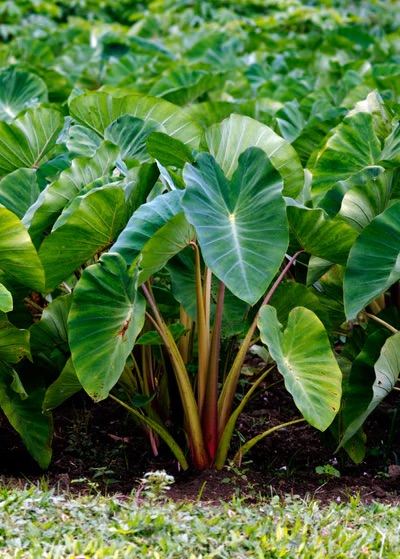
Photo courtesy of MNBG
Hawaiian name: Kalo (Taro)
Botanical name: Colocasia esculenta
Family: Araceae (Philodendron Family)
Status: Polynesian-introduced
Where it has naturalized: All main islands except Kahoʻolawe HI exc. Ka
Water/Light: Wet, with full to partial sunlight
Elevation range: All elevations
Height: Up to 7 feet
Kalo was probably the most important food crop brought over with the first Polynesian settlers to Hawai‘i. Kalo is the kino lau (physical manifestation) of the Hawaiian god, Lono, and carries the name Hāloanakalaukapalili, the elder stillborn brother of the first Hawaiian, Hāloa. From the buried body of Hāloanakalaukapalili grew the first kalo plant. Early Hawaiians grew at least 200 to 300 unique Hawaiian varieties; today about 65 varieties remain. Poi is produced by steaming the corms, traditionally in an imu (underground oven, then mashing while gradually adding water using a pōhaku kuʻi ʻai (stone pounder) and papa kuʻi ʻai (poi making board). In addition to being a staple food, poi was used in religious rituals, as bait for 'ōpelu fishing, and for gluing kapa pieces together. In Hawaiian lāʻau lapaʻau (Hawaiian medicine), kalo was used to stop wounds from bleeding, prevention of swelling or pain from insect bites, and for fever reduction. A purple to red kapa dye can be made from the ʻula ʻula poni kalo variety. All parts of kalo are edible if cooked. Kalo contains calcium oxalate crystals which cause a painful itchy sensation if eaten raw or undercooked. Hawaiians were the only culture to develop the method of growing kalo in loʻi (flooded terrace systems), and some kalo was grown in māloʻo māla (rainfed, directly in soil, without flooded conditions). Different Hawaiian varieties were preferred for māloʻo or lo’i, and in different elevations and soils, but all varieties can be successfully grown in either.
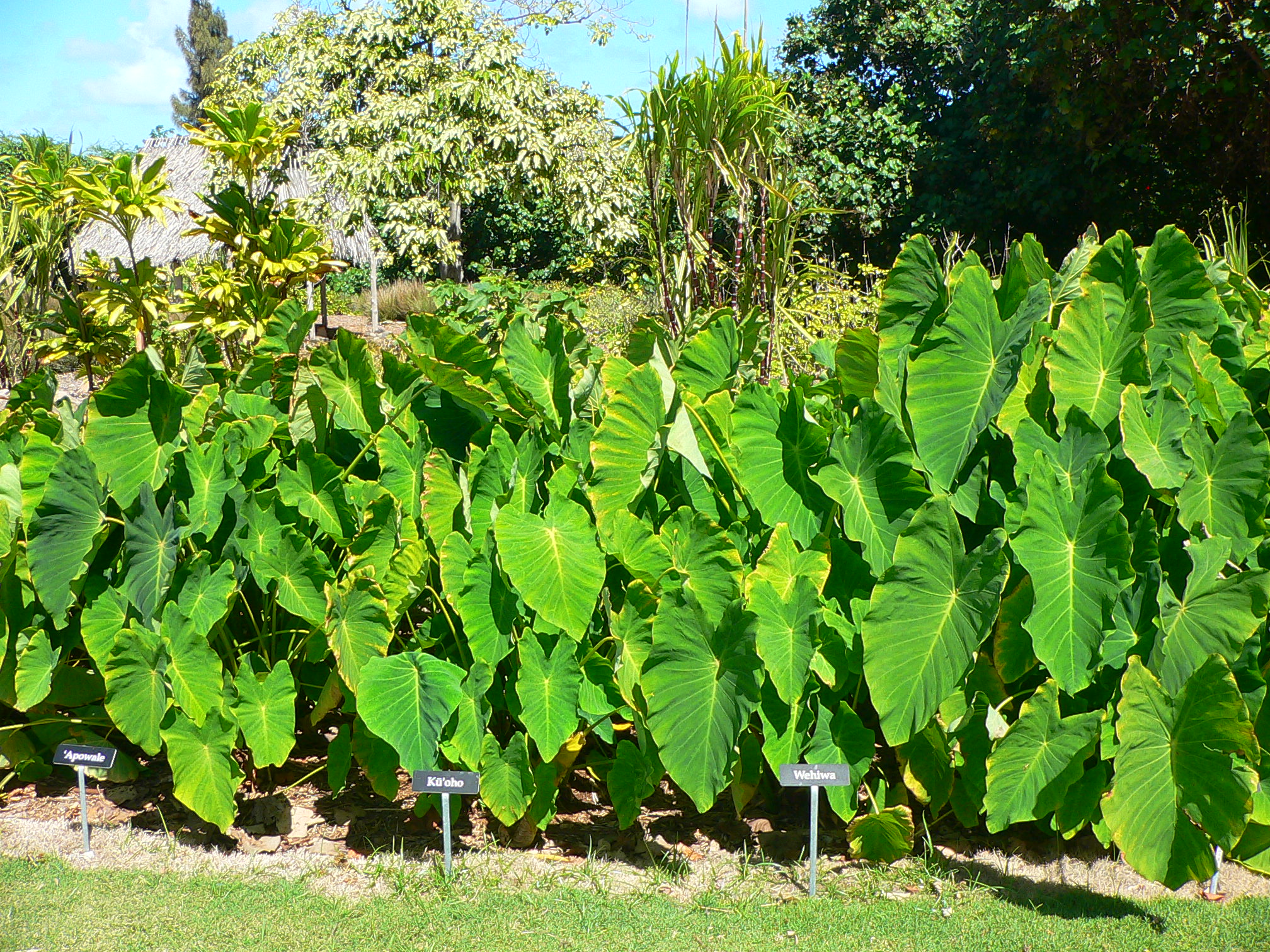
Photo credit: MNBG
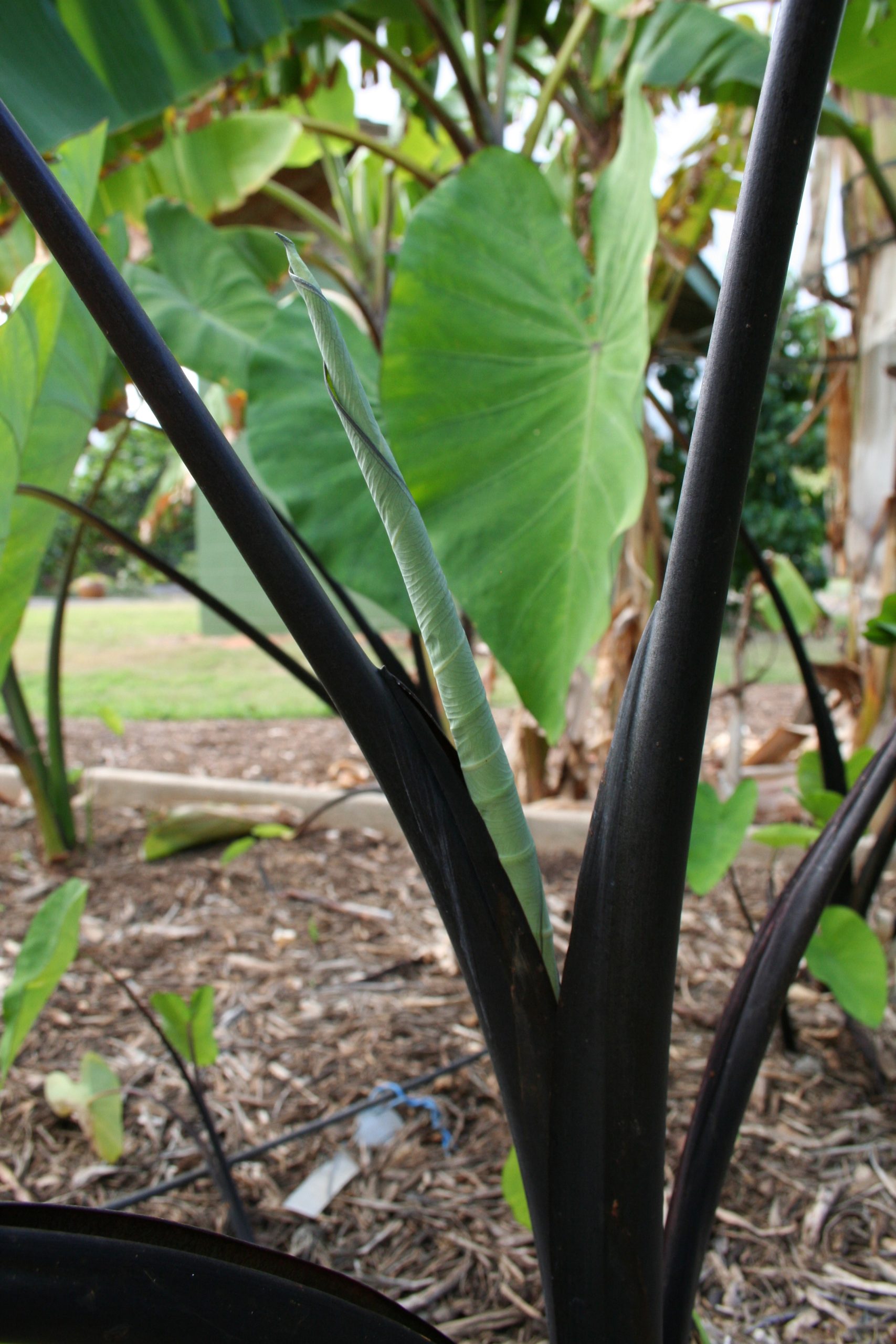
Photo credit: MNBG
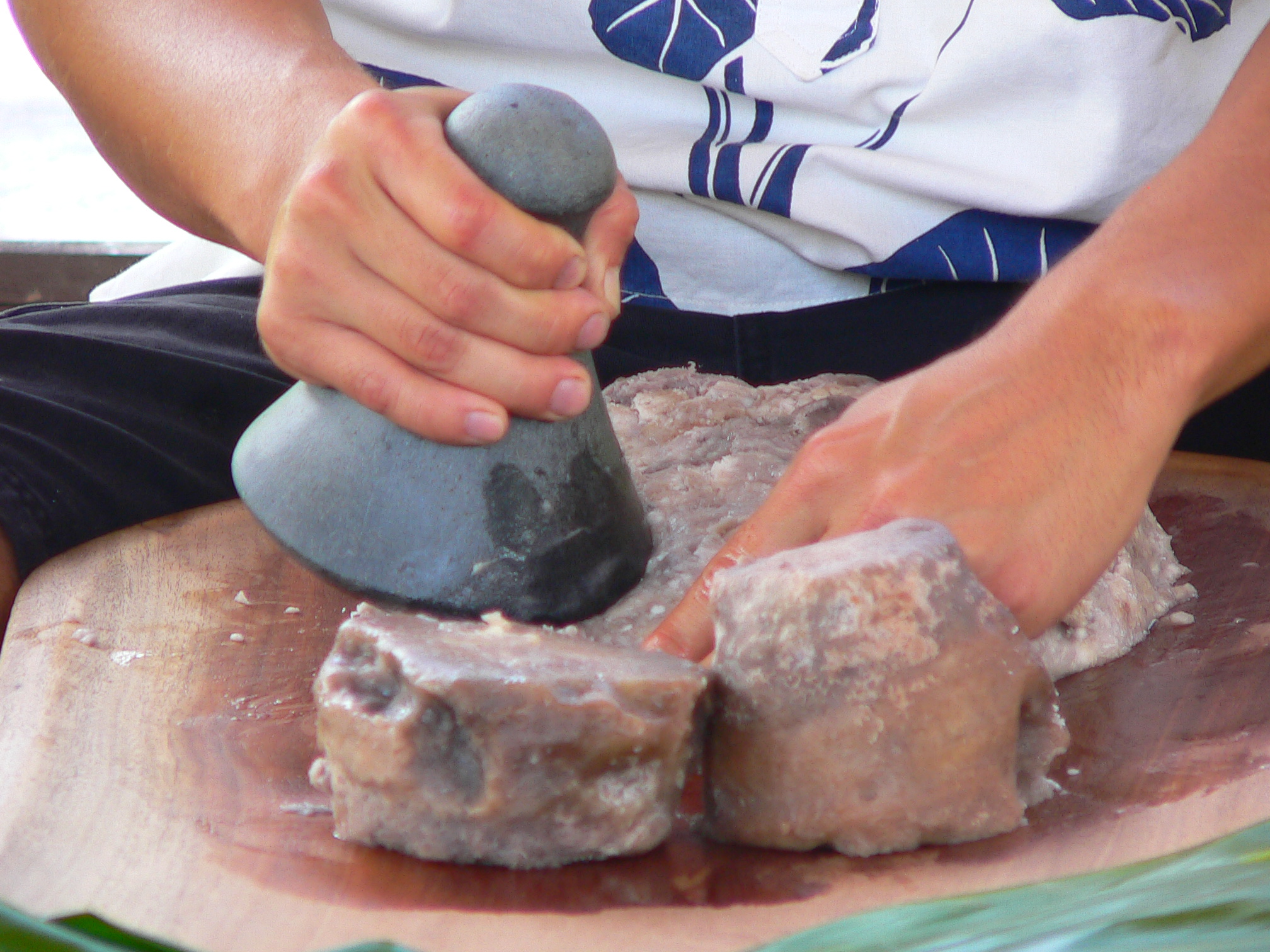
Photo credit: MNBG
Location
The Garden is located at 150 Kanaloa Avenue in Kahului, Maui, right across from the War Memorial Stadium.
(808) 249-2798
Hours of Operation
Tuesday through Saturday,
8:00 a.m. – 4:00 p.m.
Closed occasionally for inclement weather and Hawaii State Holidays.
Admission
Members: Free
General: $10
Keiki Under 12: Free
Kama'aina: Free
(with Hawai'i ID)
Plants from the MNBG Collection:
- ‘A‘ali‘i (Dodonaea viscosa)
- ‘Āhinahina (Achyranthes splendens var. splendens)
- ‘Āhinahina (Artemisia mauiensis)
- ‘Ākala (Rubus hawaiensis)
- ‘Ākia (Wikstroemia uva-ursi var. uva-ursi)
- ‘Akoko (Euphorbia degeneri)
- Alahe'e (Psydrax odorata)
- ‘Ānapanapa (Colubrina asiatica)
- ‘Awa (Piper methysticum)
- Hala (Pandanus tectorius)
- Hala pepe (Dracaena auwahiensis)
- Hau (Hibiscus tileaceus)
- Hau hele wai (‘Akiohala) (Hibiscus furcellatus)
- Hao (Rauvolfia sandwicensis)
- Hō‘awa (Pittosporum glabrum)
- Hō‘awa (Pittosporum hosmeri)
- ‘Iliahi (Santalum haleakalae)
- ‘Iliahialo‘e (Santalum ellipticum)
- ʻIlima papa (Sida fallax)
- Kalo, (Colocasia esculenta)
- Kamani (Callophyllum inophyllum)
- Kī (Cordyline fruticosa)
- Koa (Acacia koa)
- Koai‘a (Acacia koaia)
- Koki‘a, Hau hele ‘ula (Kokia drynarioides)
- Koki‘o ke‘o ke‘o (Hibiscus arnottianus)
- Koki‘o ke‘oke‘o (Hibiscus arnottianus subsp. immaculatus)
- Koki‘o ‘ula‘ula (Hibiscus kokio ssp. kokio)
- Koki‘o ‘ula‘ula (Hibiscus kokio ssp. saintjohnnianus)
- Koki‘o ke‘o ke‘o (Hibiscus waimeae ssp. waimeae)
- Kou (Cordia subcordata)
- Kukui (Aleurites moluccana)
- Loulu lelo (Pritchardia hillebrandii)
- Loulu (Pritchardia remota)
- Maʻo (Gossypium tomentosum)
- Ma‘o hau hele (Hibiscus brackenridgei)
- Māmaki (Pipturus albidus)
- Mau‘u lā‘ili (Sisyrinchium acre)
- Mehame, Hame (Antidesma platyphyllum var. platyphyllum)
- Milo (Thespesia populnea)
- Naio (Myoporum sandwicense)
- Nānū (Gardenia brighamii)
- Ōhai (Sesbania tomentosa)
- ʻŌhiʻa ʻai (Syzygium malaccense)
- ‘Ōhia lehua (Metrosideros polymorpha)
- Pōhinahina (Vitex rotundifolia)
- Pōkalakala (Polyscias racemosa)
- ‘Uala (Sweet Potato)
- ‘Uki ‘uki (Dianella sandwicensis)
- ʻUlu cv. ‘Maʻafala’(Artocarpus altilis)
- Wauke (Broussonetia papyrifera)
- Wiliwili (Erythrina sandwicensis)
