ʻIlima (Sida fallax)
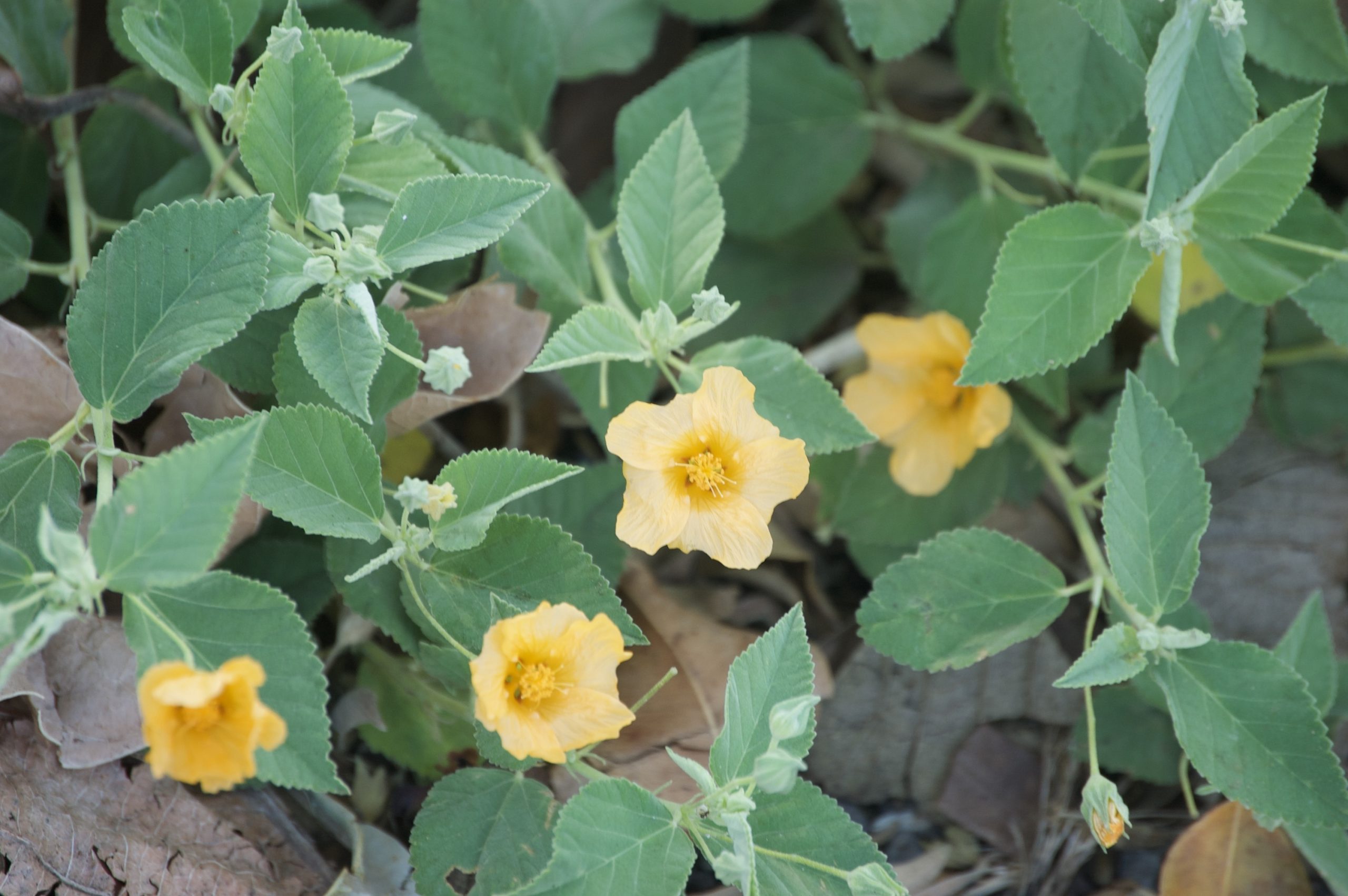
Photo courtesy of MNBG
Hawaiian name: ‘Ilima
Botanical name: Sida fallax
Family: Malvaceae (Hibiscus Family)
Status: Indigenous
Where found: All Hawaiian Islands Mi/ N/ Le/ HI
Water/Light: Dry, with full sun exposure
Elevation range: 0 to 6,500 feet
Height: 6 inches to 10 feet, with an up to 8 foot spread (depending on variety)
‘Ilima is one of the few natives that flourish in dry land areas, though feral ungulates like deer and goats have eliminated many unique wild populations. ‘Ilima flowers vary in shades of yellow, orange, red, to a rare greenish color. Early Hawaiians, too, recognized these various forms and gave them distinctive names including kuakea (light yellow); melemele (strong yellow); ‘ilima lei (deep gold); ‘ilima ‘ula‘ula (bronze red); and kolī kukui (rusty red). ‘Ilima was one of the few plants cultivated by early Hawaiians specifically for lei making as 500 to 1,000 blossoms make a single strand lei. Originally, it was said that lei ‘ilima were reserved for royalty as they looked very much like the yellow feather lei worn only by ali‘i (lei hulu), but Pukui notes that this is not strictly true. It is said that Hawai'i's monarch, Emalani (royal Emma), full name Queen Emma Kalanikaumakaamano Kaleleonālani Na‘ea Rooke (1836-1885) enjoyed lei ‘ilima over all other lei. According to Bernice Pauahi Bishop Museum, “The tradition of each Hawaiian Island being represented by a lei and color was created for the Floral Parades, which were staged annually in Honolulu from 1906 through 1917. The Kamehameha Day Parade, which began in 1914, adopted the same concept and still carries it on today.” ʻIlima is the official lei flower of Oʻahu. The leaf buds, flowers, and root bark of certain varieties were used in various medicines. According to the Bishop Museum’s ethnobotany database, “…the stems of ʻilima were used in house frames, and lashed together to encircle taro-planting mounds in swampland. The vines were used as rough basketry and floor covering under sleeping mats and used on kuahu or hula altars.” ʻIlima are naturally adapted to areas that go many months without rain, and develop fungal and pest problems when irrigated, planted in the shade, or planted too closely. They only need to be watered for about a month to establish; after that, they are healthiest when part of a rainfall-only garden.
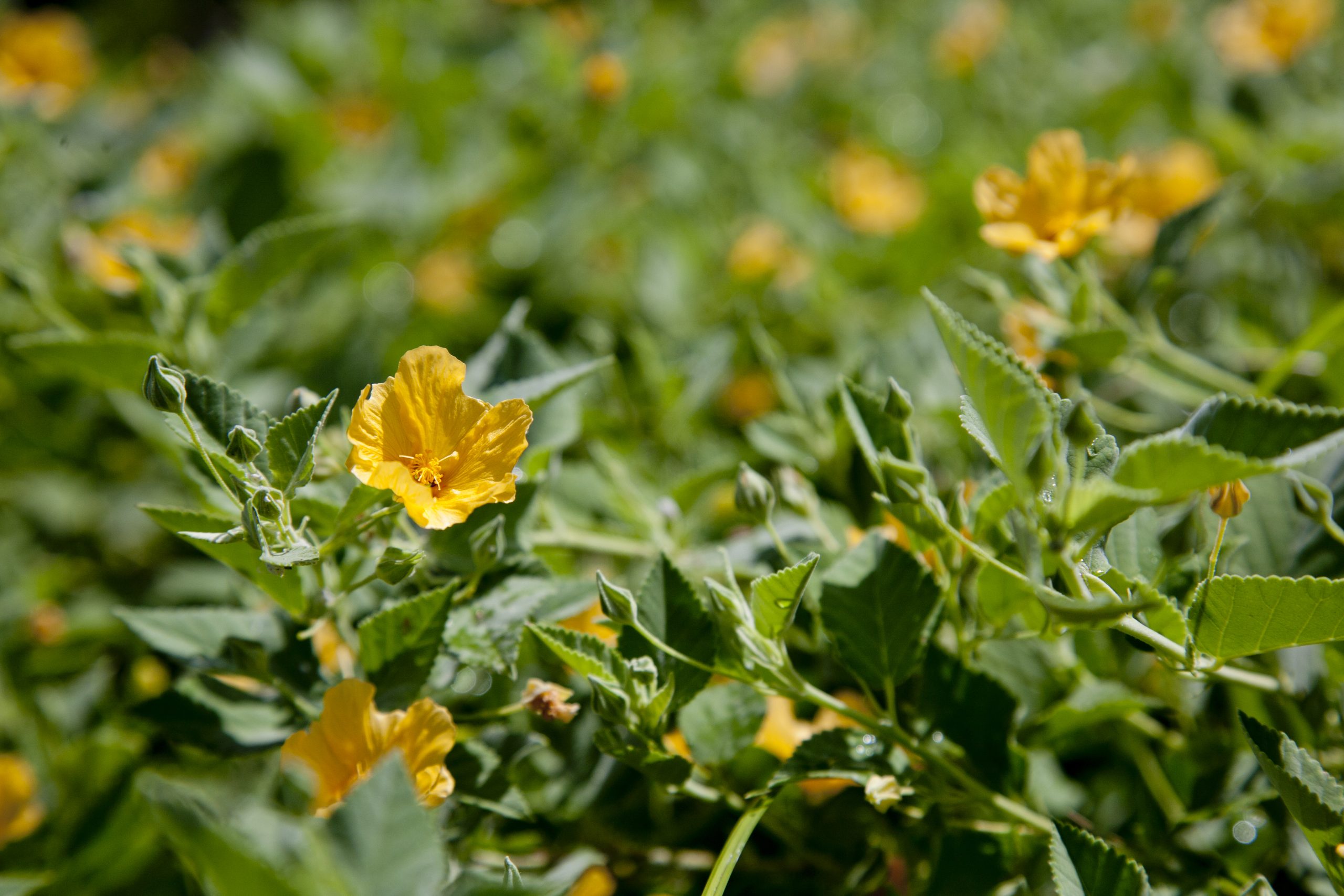
Photo credit: MNBG
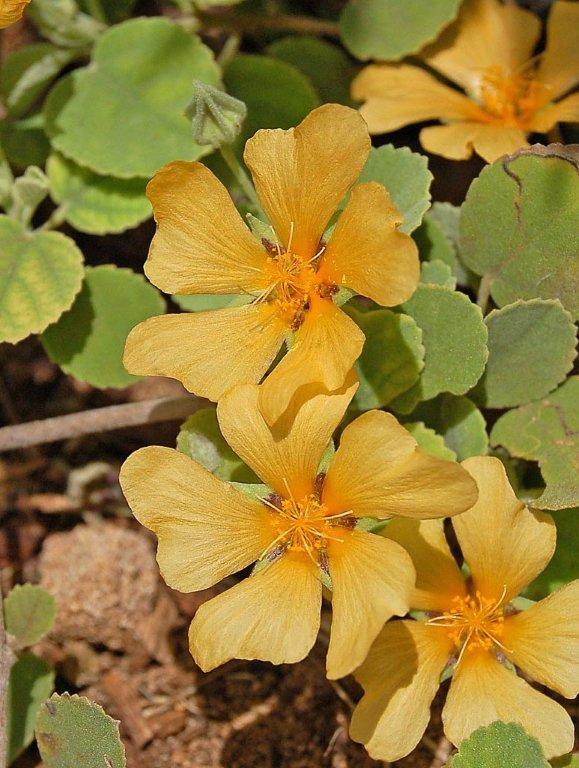
Photo credit: MNBG
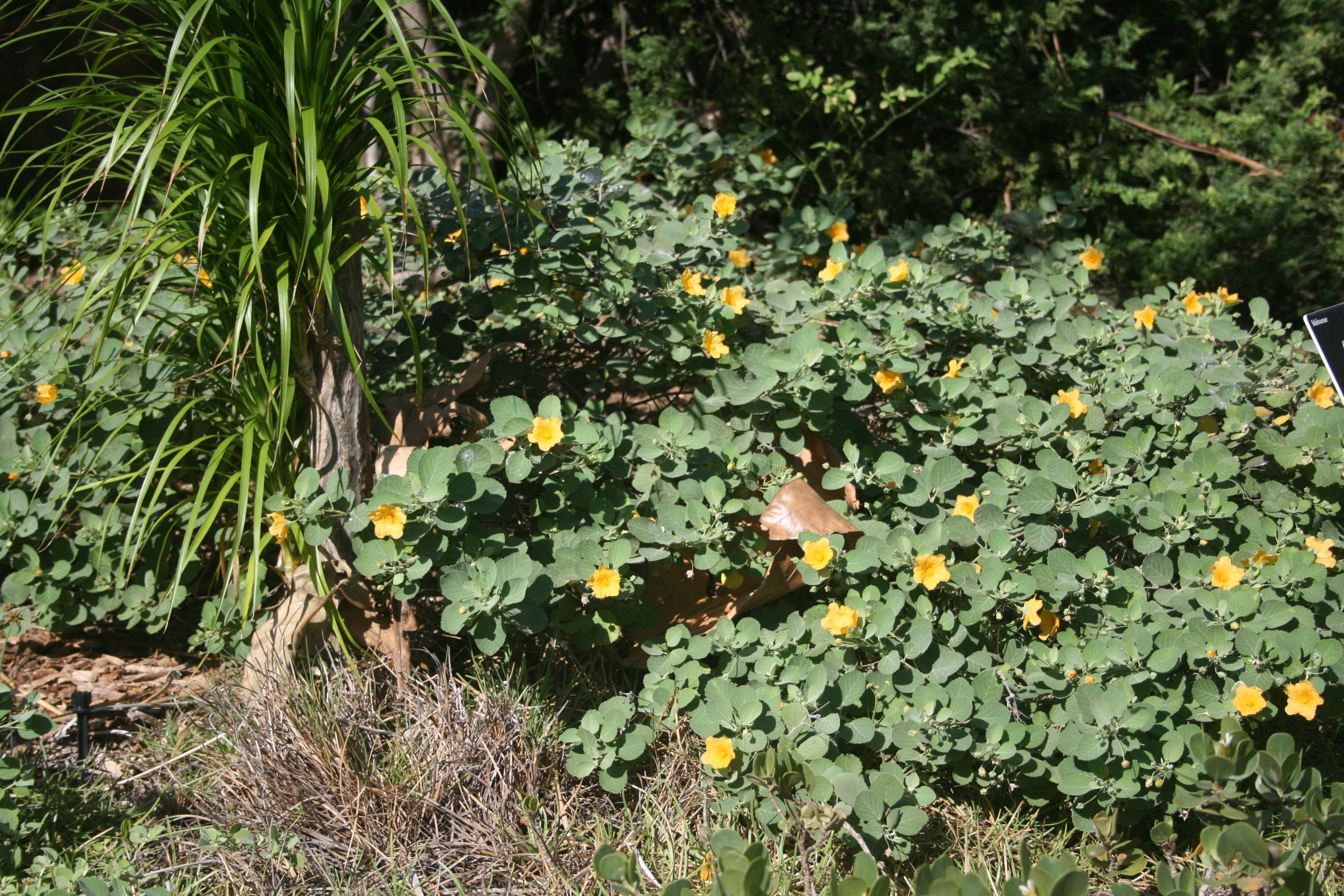
Photo credit: MNBG
Please Consider
Making a Donation

Plants from the MNBG Collection:
- ‘A‘ali‘i (Dodonaea viscosa)
- ‘Āhinahina (Achyranthes splendens var. splendens)
- ‘Āhinahina (Artemisia mauiensis)
- ‘Ākala (Rubus hawaiensis)
- ‘Ākia (Wikstroemia uva-ursi var. uva-ursi)
- ‘Akoko (Euphorbia degeneri)
- Alahe'e (Psydrax odorata)
- ‘Ānapanapa (Colubrina asiatica)
- ‘Awa (Piper methysticum)
- Hala (Pandanus tectorius)
- Hala pepe (Dracaena auwahiensis)
- Hau (Hibiscus tileaceus)
- Hau hele wai (‘Akiohala) (Hibiscus furcellatus)
- Hao (Rauvolfia sandwicensis)
- Hō‘awa (Pittosporum glabrum)
- Hō‘awa (Pittosporum hosmeri)
- ‘Iliahi (Santalum haleakalae)
- ‘Iliahialo‘e (Santalum ellipticum)
- ʻIlima papa (Sida fallax)
- Kalo, (Colocasia esculenta)
- Kamani (Callophyllum inophyllum)
- Kī (Cordyline fruticosa)
- Koa (Acacia koa)
- Koai‘a (Acacia koaia)
- Koki‘a, Hau hele ‘ula (Kokia drynarioides)
- Koki‘o ke‘o ke‘o (Hibiscus arnottianus)
- Koki‘o ke‘oke‘o (Hibiscus arnottianus subsp. immaculatus)
- Koki‘o ‘ula‘ula (Hibiscus kokio ssp. kokio)
- Koki‘o ‘ula‘ula (Hibiscus kokio ssp. saintjohnnianus)
- Koki‘o ke‘o ke‘o (Hibiscus waimeae ssp. waimeae)
- Kou (Cordia subcordata)
- Kukui (Aleurites moluccana)
- Loulu lelo (Pritchardia hillebrandii)
- Loulu (Pritchardia remota)
- Maʻo (Gossypium tomentosum)
- Ma‘o hau hele (Hibiscus brackenridgei)
- Māmaki (Pipturus albidus)
- Mau‘u lā‘ili (Sisyrinchium acre)
- Mehame, Hame (Antidesma platyphyllum var. platyphyllum)
- Milo (Thespesia populnea)
- Naio (Myoporum sandwicense)
- Nānū (Gardenia brighamii)
- Ōhai (Sesbania tomentosa)
- ʻŌhiʻa ʻai (Syzygium malaccense)
- ‘Ōhia lehua (Metrosideros polymorpha)
- Pōhinahina (Vitex rotundifolia)
- Pōkalakala (Polyscias racemosa)
- ‘Uala (Sweet Potato)
- ‘Uki ‘uki (Dianella sandwicensis)
- ʻUlu cv. ‘Maʻafala’(Artocarpus altilis)
- Wauke (Broussonetia papyrifera)
- Wiliwili (Erythrina sandwicensis)
