Koki‘o ke‘o ke‘o (Hibiscus arnottianus)
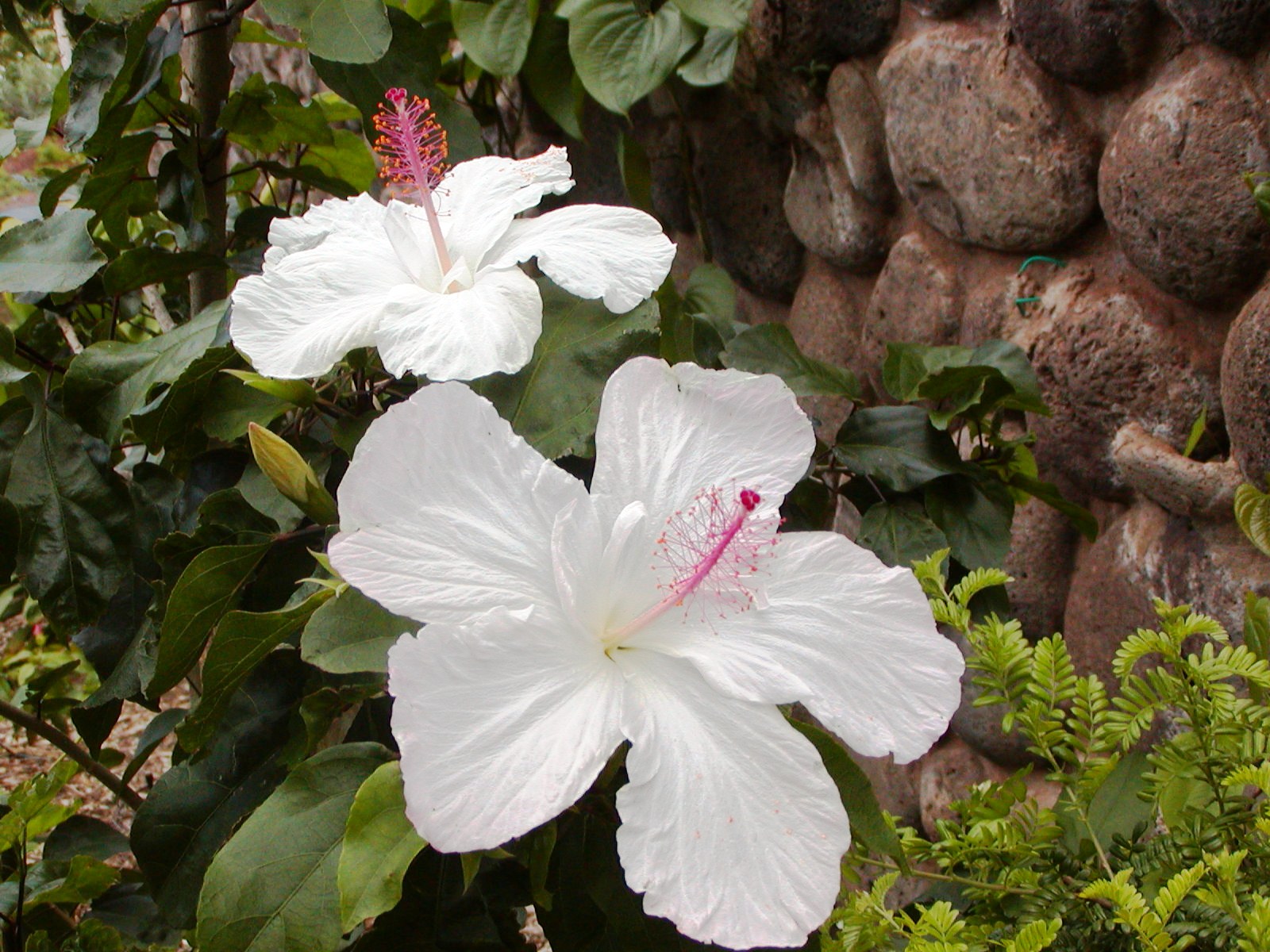
Photo courtesy of MNBG
Hawaiian name: Koki‘o ke‘oke‘o
Botanical name: Hibiscus arnottianus (Formerly Hibiscus arnottianus subsp. arnottianus)
Family: Malvaceae (Mallow Family)
Status: Endemic
Where found: O‘ahu O Wa; eastern Ko: Wahiawa to Niu Valley
Water/Light: Full sun to part shade, dry to mesic
Elevation range: 390-2,590 feet
Height: 26-32 feet
Hawaiian white flowered native Hibiscus are reputed to be the only scented Hibiscus in the world, and have been used extensively in breeding cultivated Hibiscus varieties. This O‘ahu mountain growing species has faintly fragrant, large white flowers with red stamens that stay open for two days. Although naturally endemic only to Oahu it is one of the easiest native Hawaiian Hibiscus to grow in cultivation, reaching maximum height only in ideal environmental conditions. The white flowers may change to pink, especially towards the end of the day, and stay open for two days unlike most other Hibiscus that close after one day. Flowers have the most scent in the early morning when opening, or in the early evening before they close. In lāʻau lapaʻau (Hawaiian medicine), the bases of flowers were sometimes consumed as a mild laxative, and all native Hibiscus were planted as ornamentals in old Hawaiʻi.
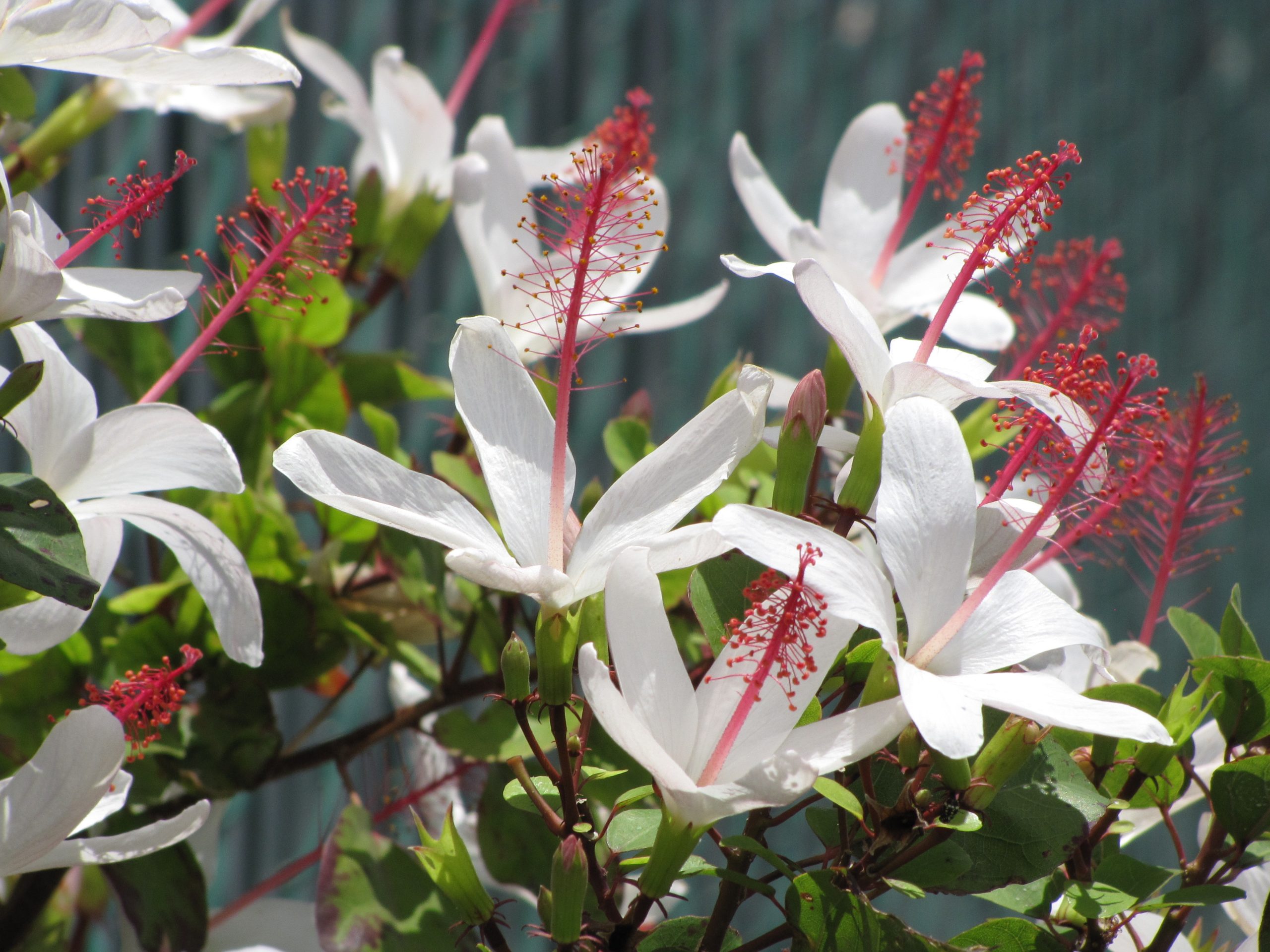
Photo credit: Forest and Kim Starr
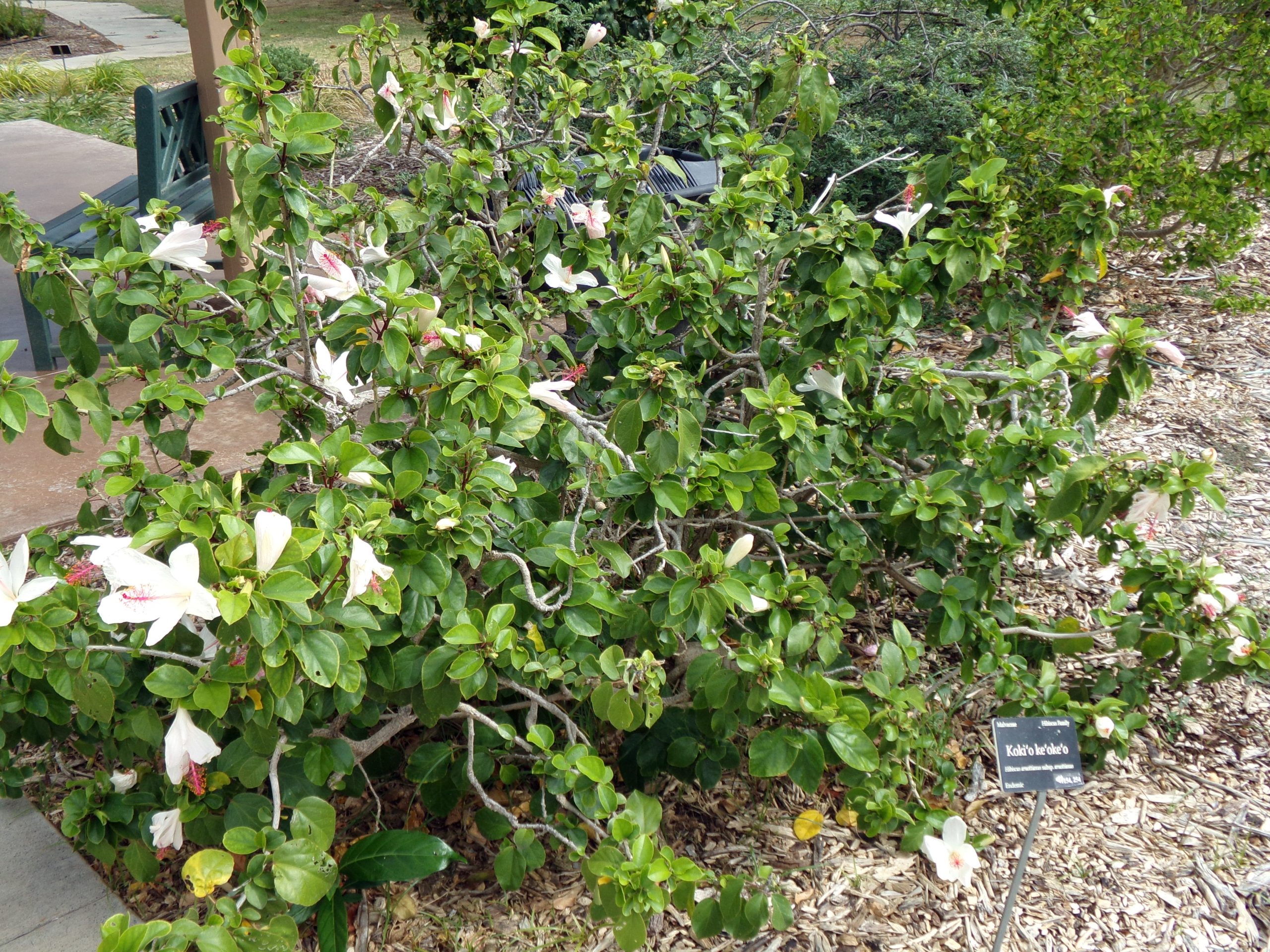
Photo credit: MNBG
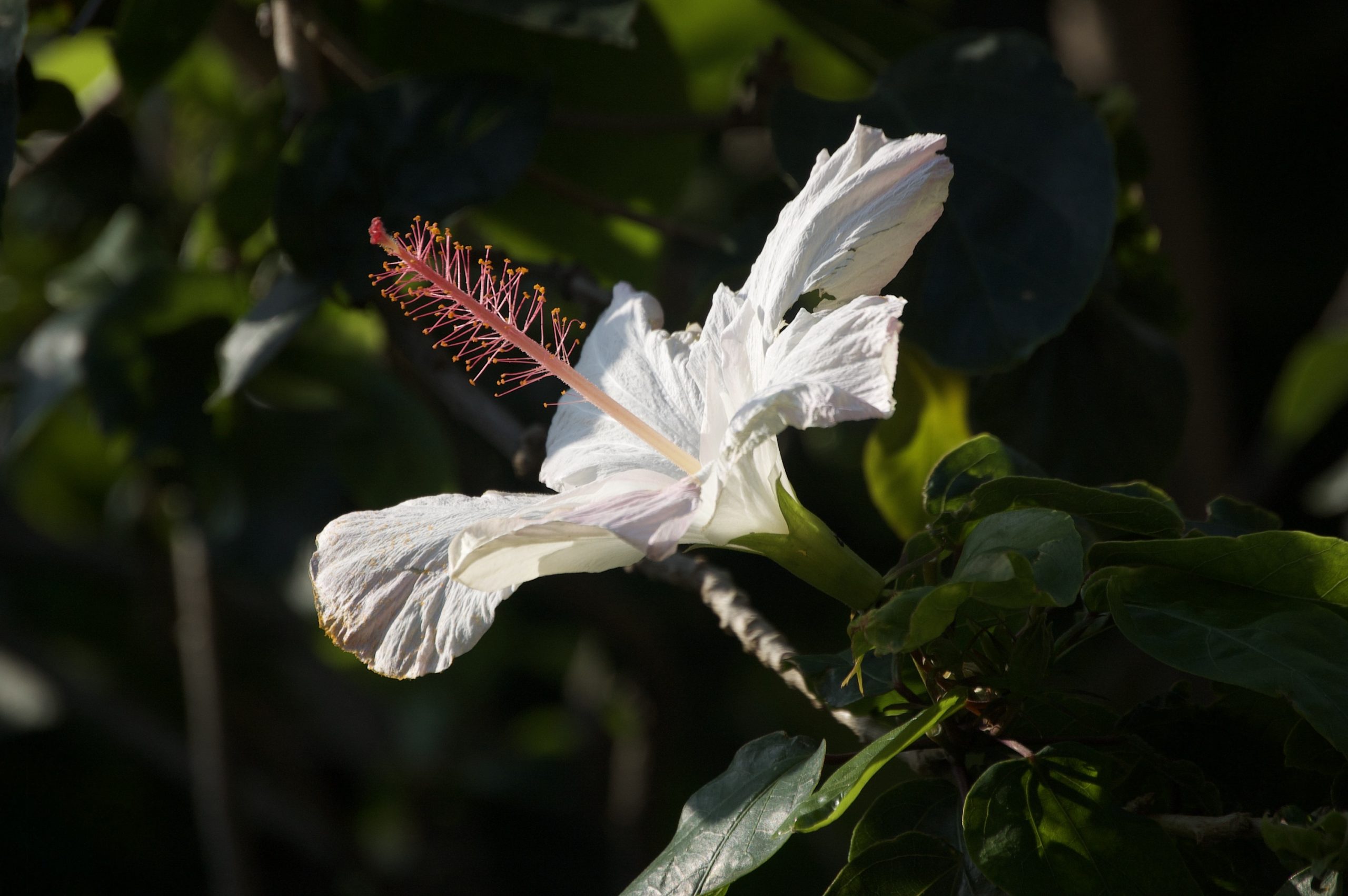
Photo credit: MNBG
Please Consider
Making a Donation

Plants from the MNBG Collection:
- ‘A‘ali‘i (Dodonaea viscosa)
- ‘Āhinahina (Achyranthes splendens var. splendens)
- ‘Āhinahina (Artemisia mauiensis)
- ‘Ākala (Rubus hawaiensis)
- ‘Ākia (Wikstroemia uva-ursi var. uva-ursi)
- ‘Akoko (Euphorbia degeneri)
- Alahe'e (Psydrax odorata)
- ‘Ānapanapa (Colubrina asiatica)
- ‘Awa (Piper methysticum)
- Hala (Pandanus tectorius)
- Hala pepe (Dracaena auwahiensis)
- Hau (Hibiscus tileaceus)
- Hau hele wai (‘Akiohala) (Hibiscus furcellatus)
- Hao (Rauvolfia sandwicensis)
- Hō‘awa (Pittosporum glabrum)
- Hō‘awa (Pittosporum hosmeri)
- ‘Iliahi (Santalum haleakalae)
- ‘Iliahialo‘e (Santalum ellipticum)
- ʻIlima papa (Sida fallax)
- Kalo, (Colocasia esculenta)
- Kamani (Callophyllum inophyllum)
- Kī (Cordyline fruticosa)
- Koa (Acacia koa)
- Koai‘a (Acacia koaia)
- Koki‘a, Hau hele ‘ula (Kokia drynarioides)
- Koki‘o ke‘o ke‘o (Hibiscus arnottianus)
- Koki‘o ke‘oke‘o (Hibiscus arnottianus subsp. immaculatus)
- Koki‘o ‘ula‘ula (Hibiscus kokio ssp. kokio)
- Koki‘o ‘ula‘ula (Hibiscus kokio ssp. saintjohnnianus)
- Koki‘o ke‘o ke‘o (Hibiscus waimeae ssp. waimeae)
- Kou (Cordia subcordata)
- Kukui (Aleurites moluccana)
- Loulu lelo (Pritchardia hillebrandii)
- Loulu (Pritchardia remota)
- Maʻo (Gossypium tomentosum)
- Ma‘o hau hele (Hibiscus brackenridgei)
- Māmaki (Pipturus albidus)
- Mau‘u lā‘ili (Sisyrinchium acre)
- Mehame, Hame (Antidesma platyphyllum var. platyphyllum)
- Milo (Thespesia populnea)
- Naio (Myoporum sandwicense)
- Nānū (Gardenia brighamii)
- Ōhai (Sesbania tomentosa)
- ʻŌhiʻa ʻai (Syzygium malaccense)
- ‘Ōhia lehua (Metrosideros polymorpha)
- Pōhinahina (Vitex rotundifolia)
- Pōkalakala (Polyscias racemosa)
- ‘Uala (Sweet Potato)
- ‘Uki ‘uki (Dianella sandwicensis)
- ʻUlu cv. ‘Maʻafala’(Artocarpus altilis)
- Wauke (Broussonetia papyrifera)
- Wiliwili (Erythrina sandwicensis)
