Kī (Cordyline fruticosa)
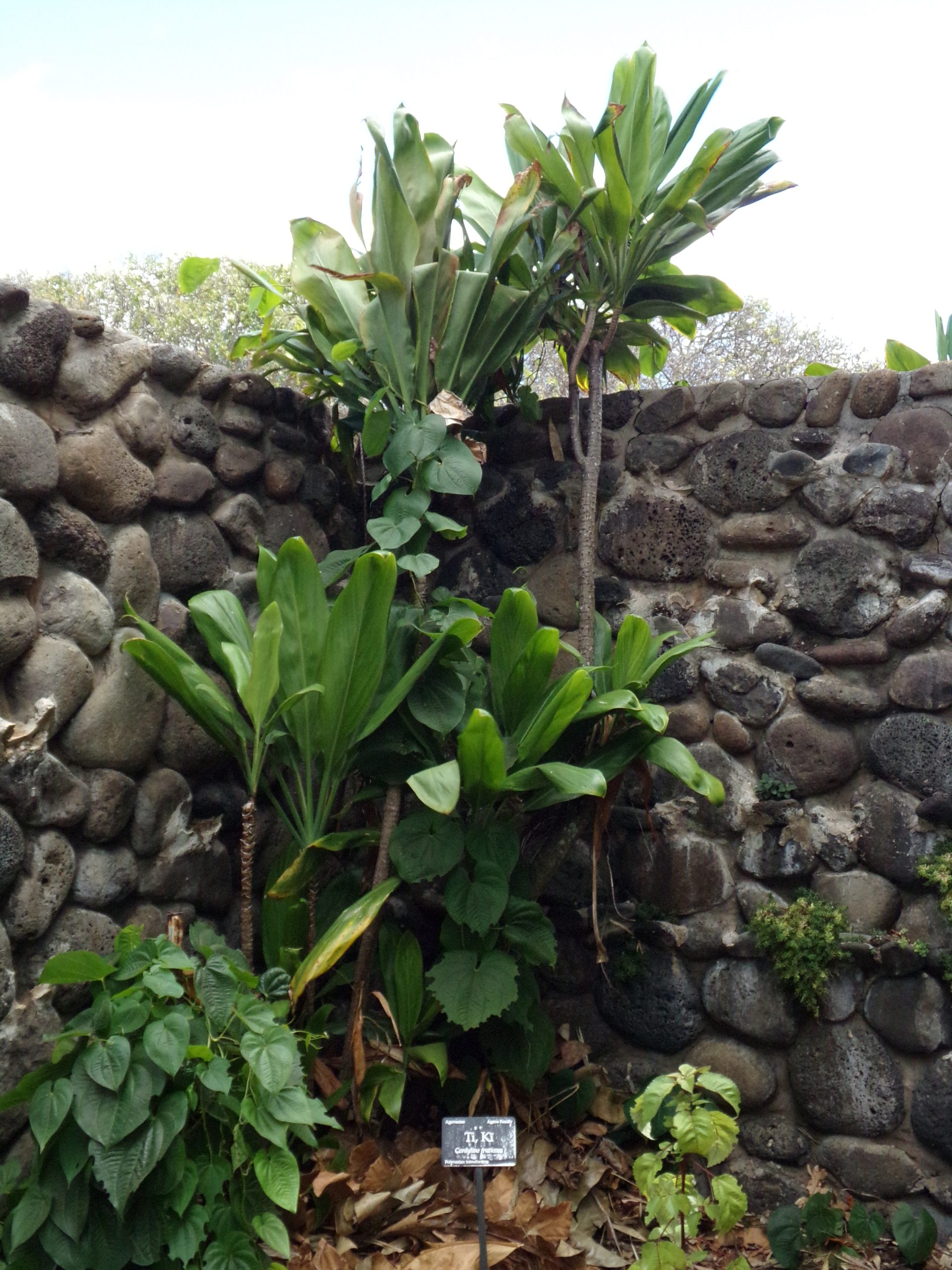
Photo courtesy of MNBG
Hawaiian name: Kī / Lāʻī (ti leaf)
Botanical name: Cordyline fruticosa
Family: Asparagaceae
Status: Polynesian-introduced
Where naturalized in the wild: All main Hawaiian islands except Kahoʻolawe HI exc. Ka
Water/Light: Moist to wet, with full to partial sunlight
Elevation range: 15 to 1,800 feet
Height: 6 to 11 feet
Kī, also called lāʻī, or ti leaf, was brought to Hawai‘i in the voyaging canoes of the first Polynesian settlers. It was used for many different applications, from ceremony and medicine to cooking and craft. As just a few examples, the leaves were made into footwear, skirts, rain capes, food wrappings, as thatch, and even to construct a musical instrument. The sweet roots were baked and eaten, and in the 18th and 19th centuries it was distilled (with other plants) into an alcoholic beverage called ‘okolehao which was used for curing scurvy. In lāʻau lapaʻau (Hawaiian medicine), leaf buds and flowers kī were also used as ingredients in treatments of nasal growths, shortness of breath, fevers, eyewash and to purge phlegm in the chest. Leaves were used as a healing apparatus as well, for example to wrap heated stones as a hot pack or as poultices. Only the green variety of kī was brought to Hawai'i by the first Polynesian settlers; the red and purple varieties were introduced much later. There was also likely a small leafed variety, of which there was an ʻōlelo noʻeau that served as an insult: Lau‘i pekepeke (small-leaved ti plant), meaning of not much use since long leaves were preferred for wrapping food. Mahalo to the Bishop Museum Ethnobotany Database, which provided most of this content.
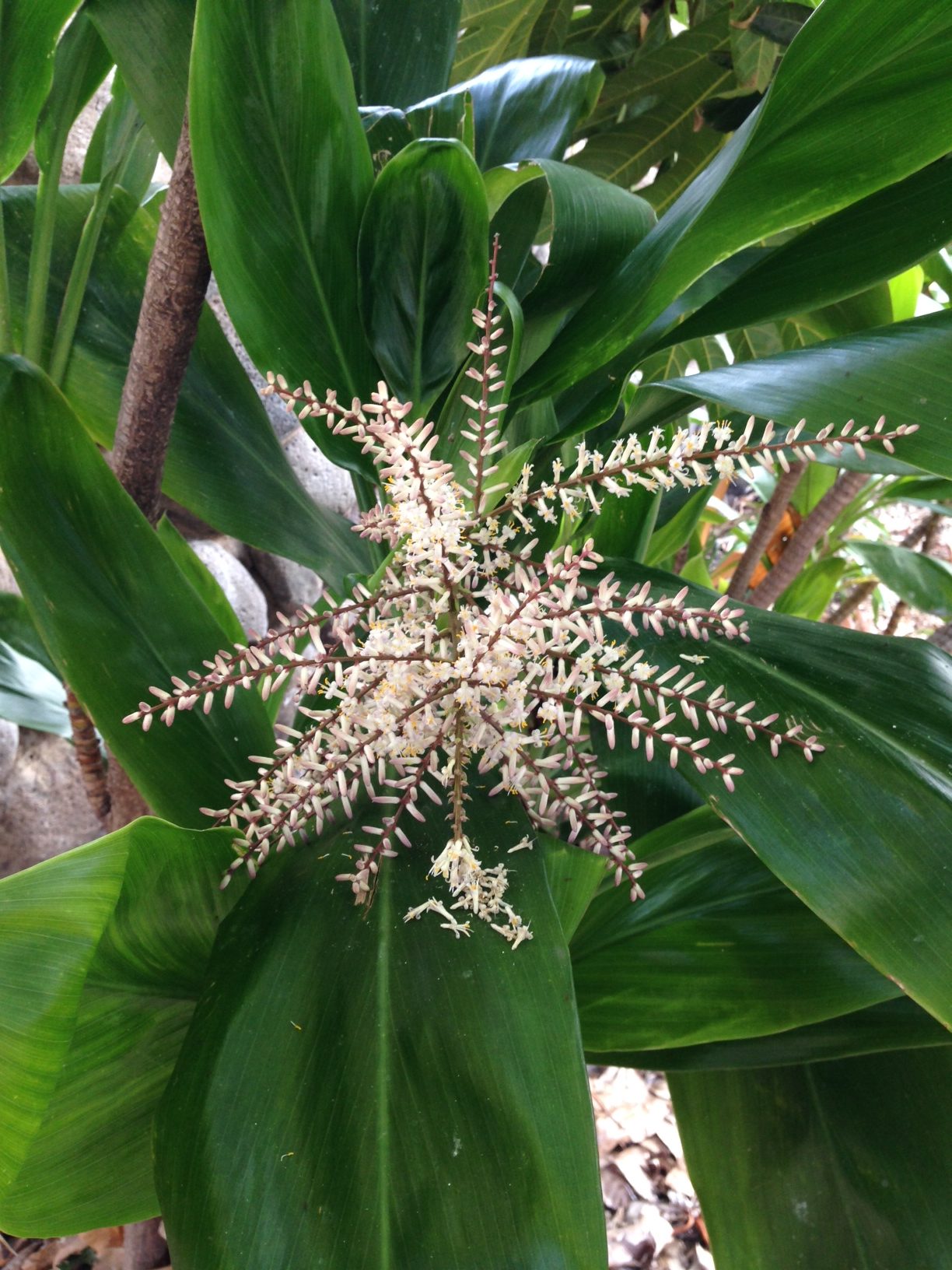
Photo credit: MNBG
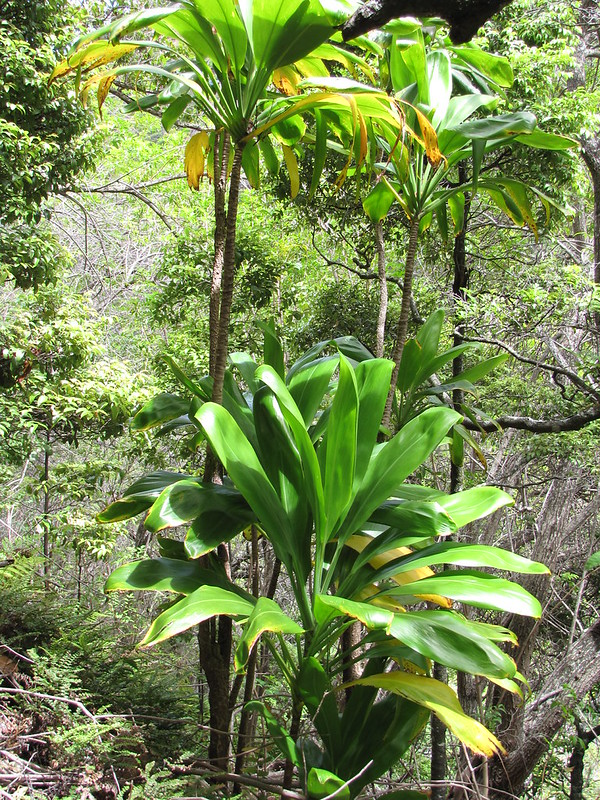
Photo credit: Forest and Kim Starr
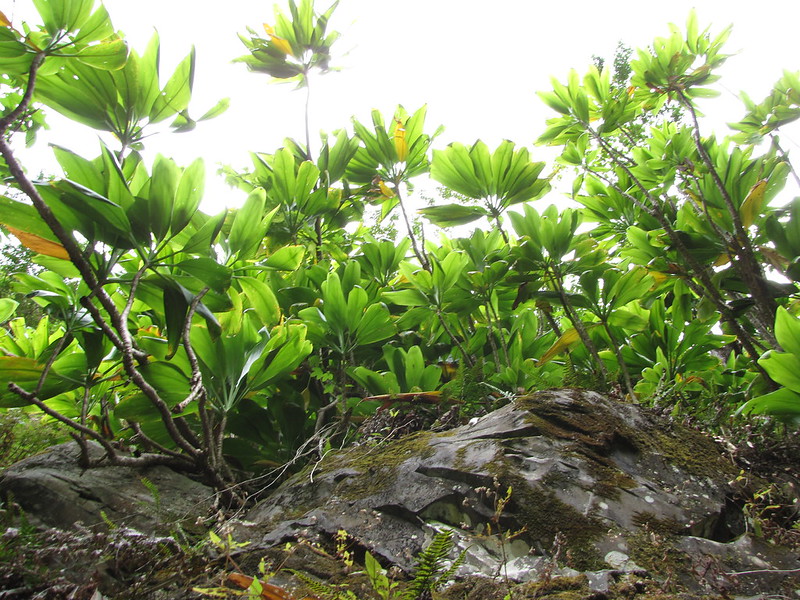
Photo credit: Forest and Kim Starr
Location
The Garden is located at 150 Kanaloa Avenue in Kahului, Maui, right across from the War Memorial Stadium.
(808) 249-2798
Hours of Operation
Tuesday through Saturday,
8:00 a.m. – 4:00 p.m.
Closed occasionally for inclement weather and Hawaii State Holidays.
Admission
Members: Free
General: $10
Keiki Under 12: Free
Kama'aina: Free
(with Hawai'i ID)
Plants from the MNBG Collection:
- ‘A‘ali‘i (Dodonaea viscosa)
- ‘Āhinahina (Achyranthes splendens var. splendens)
- ‘Āhinahina (Artemisia mauiensis)
- ‘Ākala (Rubus hawaiensis)
- ‘Ākia (Wikstroemia uva-ursi var. uva-ursi)
- ‘Akoko (Euphorbia degeneri)
- Alahe'e (Psydrax odorata)
- ‘Ānapanapa (Colubrina asiatica)
- ‘Awa (Piper methysticum)
- Delissea rhytidosperma
- Hāhā (haha) (Cyanea magnicalyx)
- Hala (Pandanus tectorius)
- Hala pepe (Dracaena auwahiensis)
- Hau (Hibiscus tileaceus)
- Hau hele wai (‘Akiohala) (Hibiscus furcellatus)
- Hao (Rauvolfia sandwicensis)
- Hō‘awa (Pittosporum glabrum)
- Hō‘awa (Pittosporum hosmeri)
- ‘Iliahi (Santalum haleakalae)
- ‘Iliahialo‘e (Santalum ellipticum)
- ʻIlima papa (Sida fallax)
- Kalo, (Colocasia esculenta)
- Kamani (Callophyllum inophyllum)
- Kī (Cordyline fruticosa)
- Koa (Acacia koa)
- Koai‘a (Acacia koaia)
- Koki‘a, Hau hele ‘ula (Kokia drynarioides)
- Koki‘o ke‘o ke‘o (Hibiscus arnottianus)
- Koki‘o ke‘oke‘o (Hibiscus arnottianus subsp. immaculatus)
- Koki‘o ‘ula‘ula (Hibiscus kokio ssp. kokio)
- Koki‘o ‘ula‘ula (Hibiscus kokio ssp. saintjohnnianus)
- Koki‘o ke‘o ke‘o (Hibiscus waimeae ssp. waimeae)
- Kou (Cordia subcordata)
- Kukui (Aleurites moluccana)
- Loulu lelo (Pritchardia hillebrandii)
- Loulu (Pritchardia remota)
- Maʻo (Gossypium tomentosum)
- Ma‘o hau hele (Hibiscus brackenridgei)
- Māmaki (Pipturus albidus)
- Mau‘u lā‘ili (Sisyrinchium acre)
- Mehame, Hame (Antidesma platyphyllum var. platyphyllum)
- Milo (Thespesia populnea)
- Naio (Myoporum sandwicense)
- Nānū (Gardenia brighamii)
- Ōhai (Sesbania tomentosa)
- ʻŌhiʻa ʻai (Syzygium malaccense)
- ‘Ōhia lehua (Metrosideros polymorpha)
- Pōhinahina (Vitex rotundifolia)
- Pōkalakala (Polyscias racemosa)
- ‘Uala (Sweet Potato)
- ‘Uki ‘uki (Dianella sandwicensis)
- ʻUlu cv. ‘Maʻafala’(Artocarpus altilis)
- Wauke (Broussonetia papyrifera)
- Wiliwili (Erythrina sandwicensis)
