‘A‘ali‘i (Dodonaea viscosa)
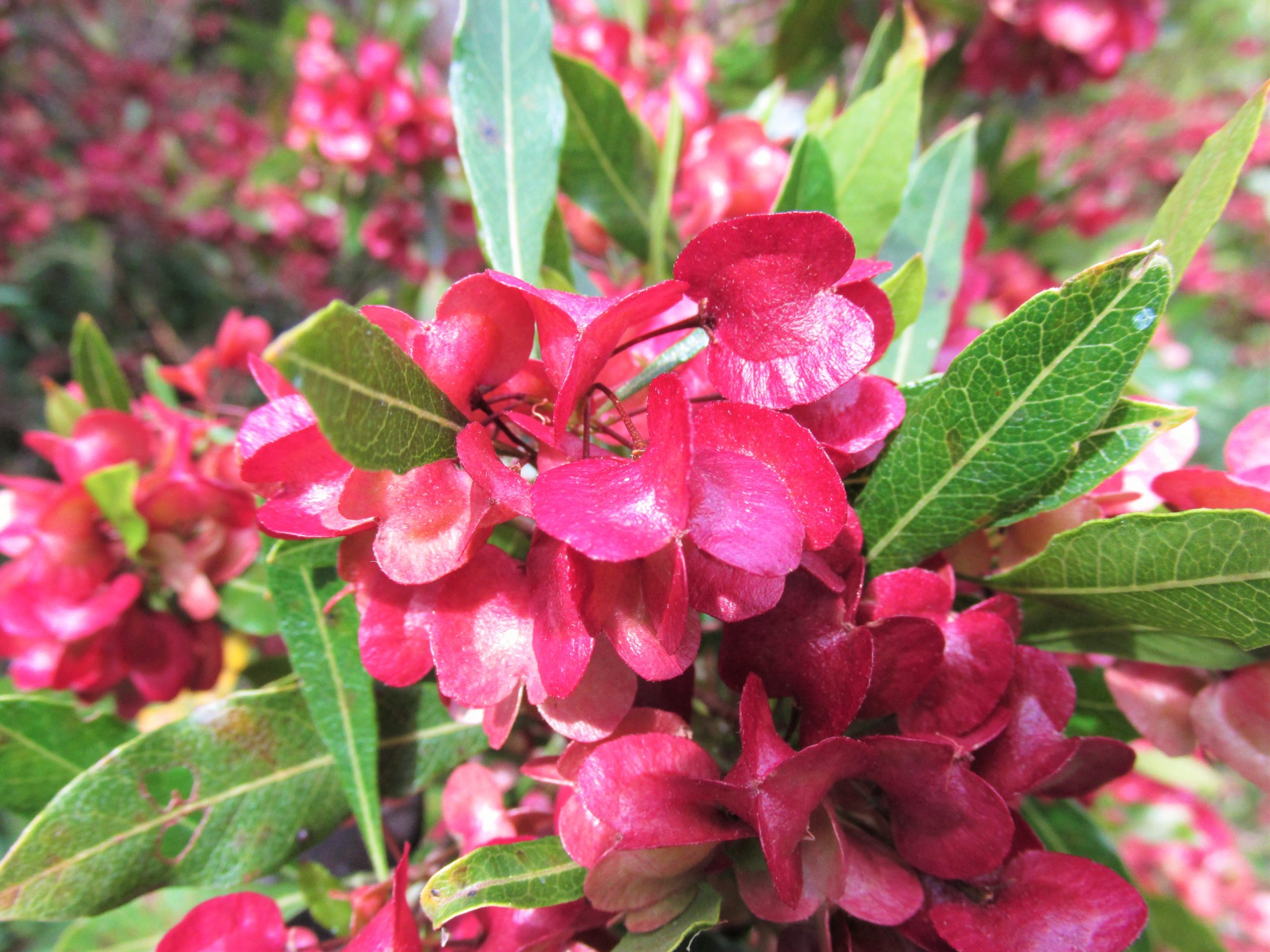
Photo courtesy of Forest and Kim Starr
Hawaiian Name: ‘A‘ali‘i
Scientific Name: Dodonaea viscosa
Family: Sapindaceae (Soapberry Family)
Status: Indigenous
Where found: Maui, Moloka‘i, Lāna‘i, Hawai‘i, O‘ahu & Kaua‘i (HI)
Water/Light: Dry, with full to part sun exposure
Elevation range: 10 to 7,710 feet
Height: Up to 30 feet, with a spread of up to 15 feet
‘Ōlelo Noeau: [M. K. PUKUI]: He ‘a‘ali‘i ku makani mai au; ‘a‘ohe makani nana e kula‘i.
Translation: I am a wind-resting ‘a‘ali‘i; no gale can push me over.
Meaning: A boast saying, "I can hold my own, even in the face of difficulties." The ‘a‘ali‘i can stand the worst of gales, twisting and bending but seldom breaking off or falling over.
Kanaka maoli (native Hawaiians) used the durable wood in past times to make house posts, canoes and spears. The fruits can be boiled to make a pink kapa dye, and the flowers which come in a variety of whites, greens, pinks, and dark reddish purple are used to make beautiful lei. In Hawaiian lāʻau lapaʻau (Hawaiian medicine), ‘a‘ali‘i leaves were mixed with other plants in a remedy to treat skin rashes. On every island, in every climate zone or elevation zone the plants will look different in some slight way from each other.
Other names for this plant include: ʻaʻaliʻi kū makani, ʻaʻaliʻi kū ma kua or kumakani. The ʻŌlelo Noʻeau (Hawaiian proverb), "He ‘a‘ali‘i kū makani mai au; ‘a‘ohe makani nāna e kula‘i" means, "I am a wind-resisting ‘a‘ali‘i; no gale can push me over," and speaks of a strong person who can hold their own in times of difficulty, like the ‘a‘ali‘i; which is able to withstand the worst of gales, twisting and bending, but seldom breaks off or falls over.
When growing ʻaʻaliʻi, it is best to prune small and dead branches rather than large living ones, as ʻaʻaliʻi does not compartmentalize wounds quickly when major branches are cut. This native is drought, salt and wind resistant, and highly adaptable.
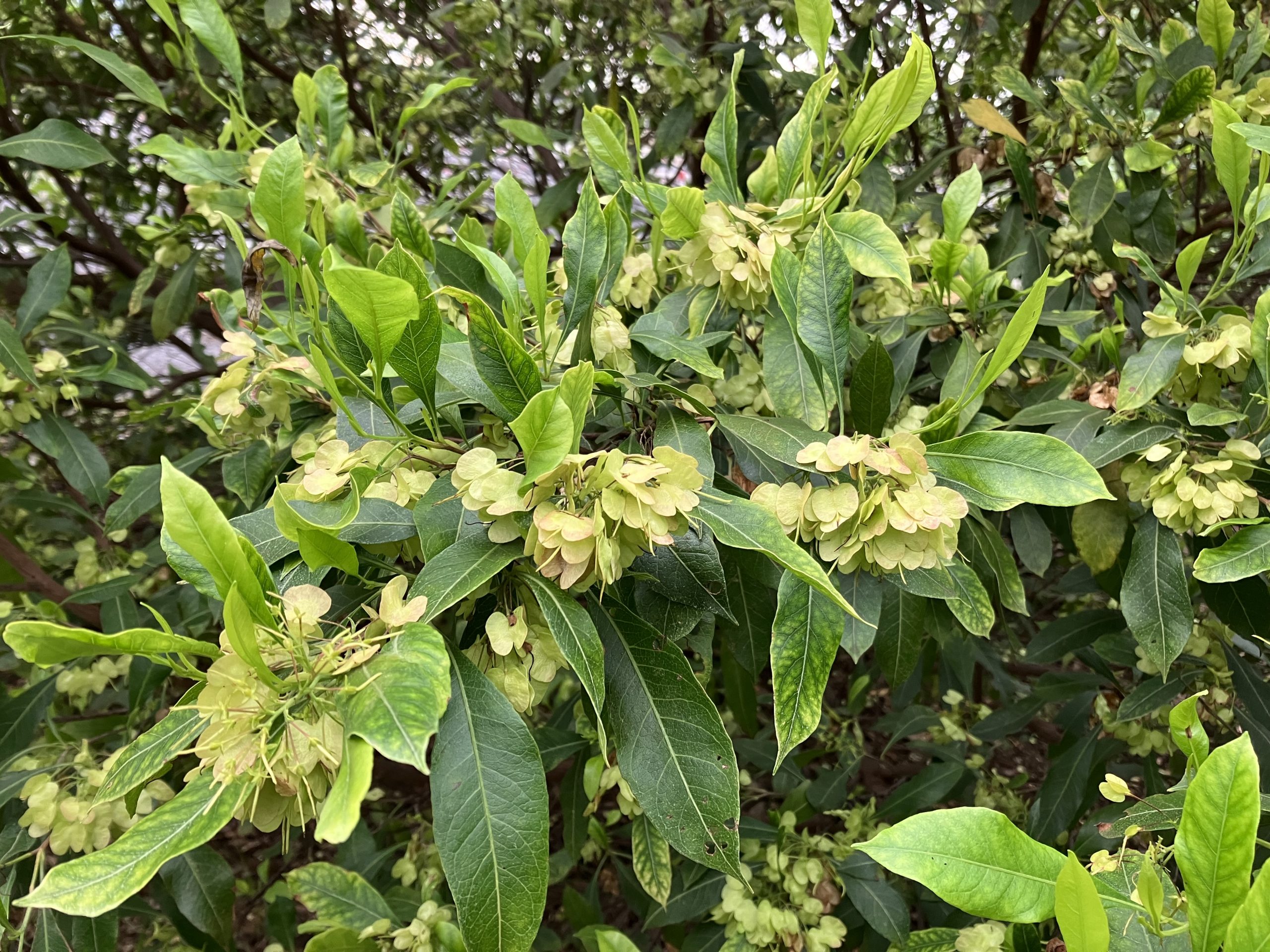
Photo credit: MNBG
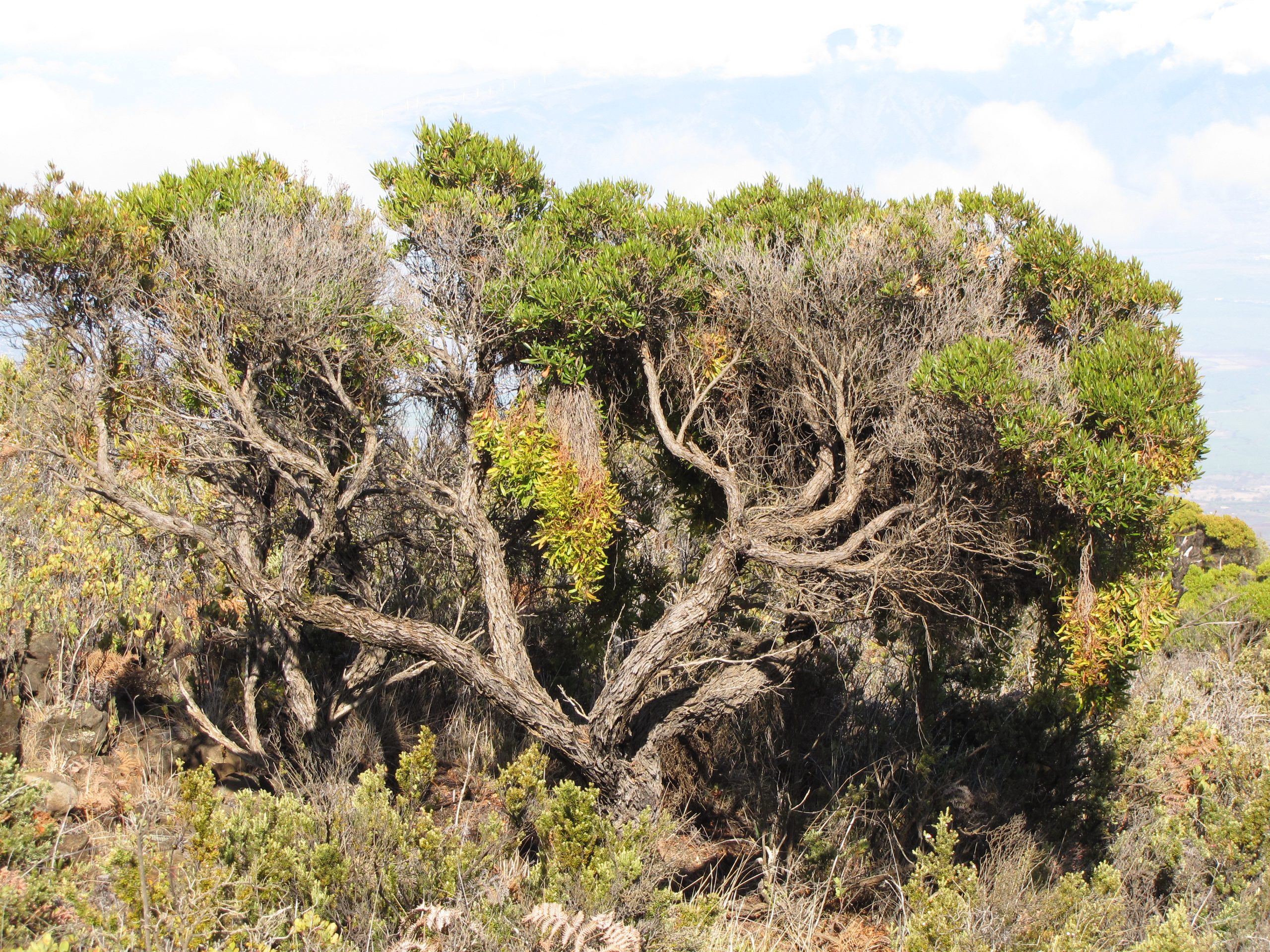
Photo credit: Forest and Kim Starr
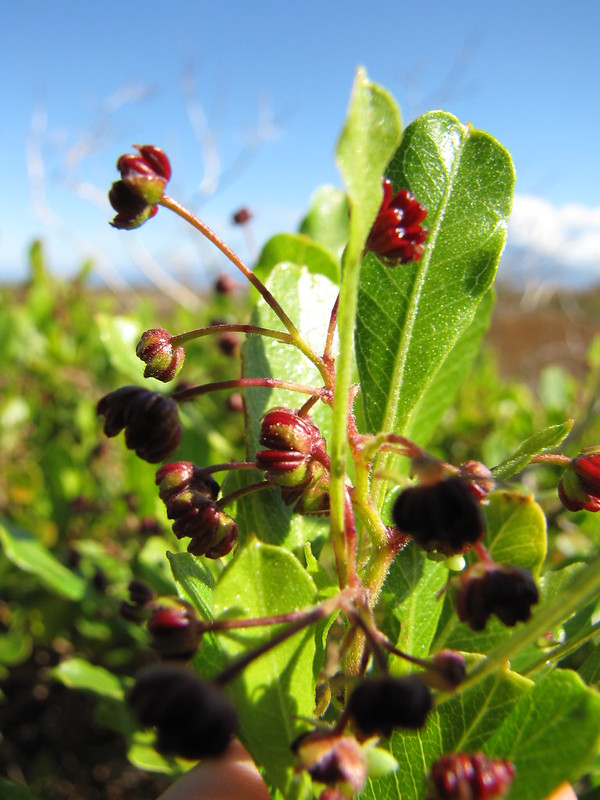
Photo credit: MNBG
Please Consider
Making a Donation

Plants from the MNBG Collection:
- ‘A‘ali‘i (Dodonaea viscosa)
- ‘Āhinahina (Achyranthes splendens var. splendens)
- ‘Āhinahina (Artemisia mauiensis)
- ‘Ākala (Rubus hawaiensis)
- ‘Ākia (Wikstroemia uva-ursi var. uva-ursi)
- ‘Akoko (Euphorbia degeneri)
- Alahe'e (Psydrax odorata)
- ‘Ānapanapa (Colubrina asiatica)
- ‘Awa (Piper methysticum)
- Delissea rhytidosperma
- Hāhā (haha) (Cyanea magnicalyx)
- Hala (Pandanus tectorius)
- Hala pepe (Dracaena auwahiensis)
- Hau (Hibiscus tileaceus)
- Hau hele wai (‘Akiohala) (Hibiscus furcellatus)
- Hao (Rauvolfia sandwicensis)
- Hō‘awa (Pittosporum glabrum)
- Hō‘awa (Pittosporum hosmeri)
- ‘Iliahi (Santalum haleakalae)
- ‘Iliahialo‘e (Santalum ellipticum)
- ʻIlima papa (Sida fallax)
- Kalo, (Colocasia esculenta)
- Kamani (Callophyllum inophyllum)
- Kī (Cordyline fruticosa)
- Koa (Acacia koa)
- Koai‘a (Acacia koaia)
- Koki‘a, Hau hele ‘ula (Kokia drynarioides)
- Koki‘o ke‘o ke‘o (Hibiscus arnottianus)
- Koki‘o ke‘oke‘o (Hibiscus arnottianus subsp. immaculatus)
- Koki‘o ‘ula‘ula (Hibiscus kokio ssp. kokio)
- Koki‘o ‘ula‘ula (Hibiscus kokio ssp. saintjohnnianus)
- Koki‘o ke‘o ke‘o (Hibiscus waimeae ssp. waimeae)
- Kou (Cordia subcordata)
- Kukui (Aleurites moluccana)
- Loulu lelo (Pritchardia hillebrandii)
- Loulu (Pritchardia remota)
- Maʻo (Gossypium tomentosum)
- Ma‘o hau hele (Hibiscus brackenridgei)
- Māmaki (Pipturus albidus)
- Mau‘u lā‘ili (Sisyrinchium acre)
- Mehame, Hame (Antidesma platyphyllum var. platyphyllum)
- Milo (Thespesia populnea)
- Naio (Myoporum sandwicense)
- Nānū (Gardenia brighamii)
- Ōhai (Sesbania tomentosa)
- ʻŌhiʻa ʻai (Syzygium malaccense)
- ‘Ōhia lehua (Metrosideros polymorpha)
- Pōhinahina (Vitex rotundifolia)
- Pōkalakala (Polyscias racemosa)
- ‘Uala (Sweet Potato)
- ‘Uki ‘uki (Dianella sandwicensis)
- ʻUlu cv. ‘Maʻafala’(Artocarpus altilis)
- Wauke (Broussonetia papyrifera)
- Wiliwili (Erythrina sandwicensis)
