
ʻUlu cv. ‘Maʻafala’
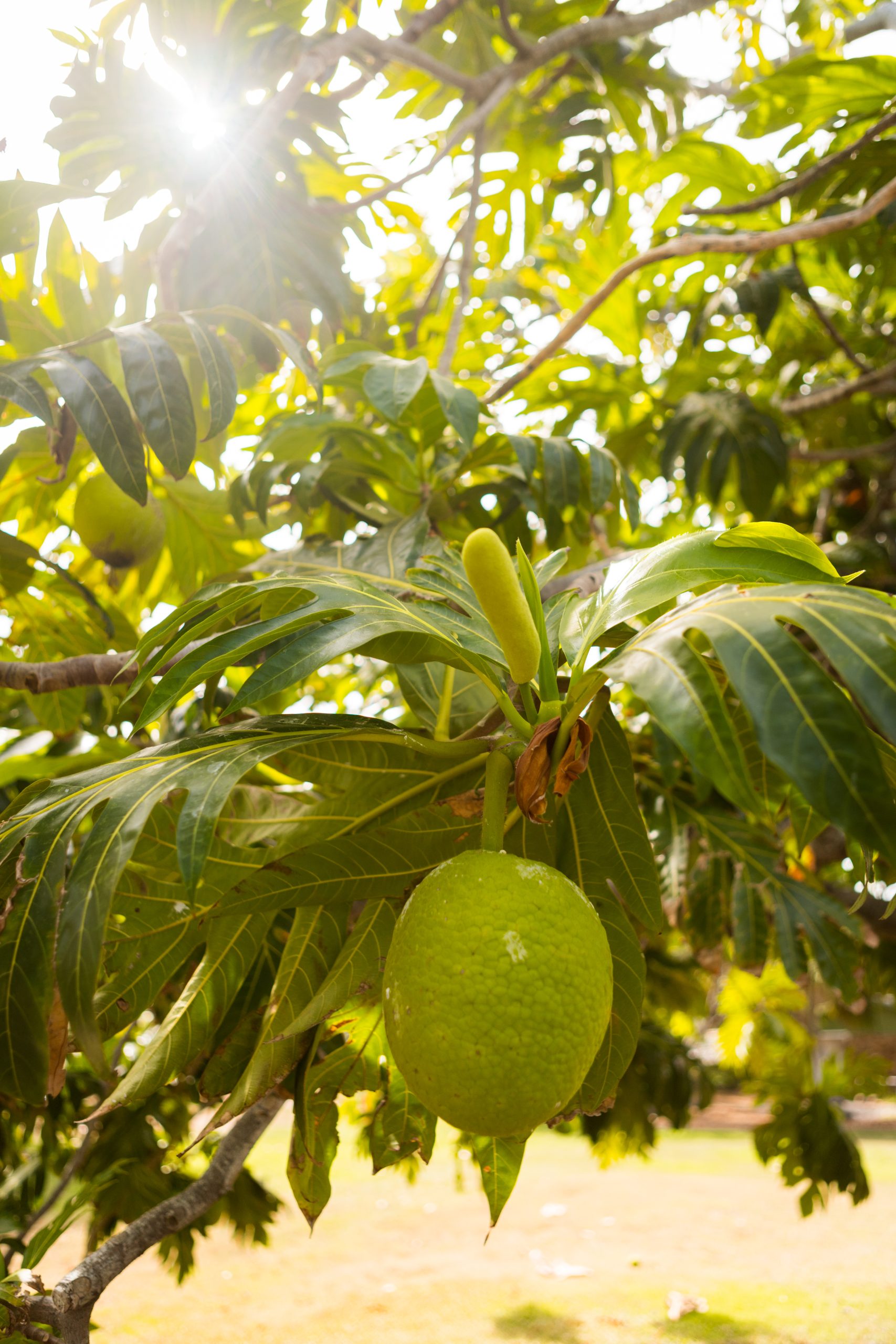
Photo courtesy of Hawaiian Airlines
Hawaiian name: ʻUlu
Botanical name: Artocarpus altilis
Family: Moraceae (Mulberry)
Status: Polynesian-introduced
Where found: Throughout the Pacific
Water/Light: Dry, with full sun exposure
Elevation range: Up to 2,000 ft.
Height: The Hawaiian ʻUlu variety can grow 50+ ft, with a 40ft spread
‘Ōlelo Noeau: ʻAʻohe ʻulu e loaʻa i ka pōkole o ka lou.
Translation: No breadfruit can be reached when the picking stick is too short.
Meaning: there is no success without preparation.
‘Ulu (breadfruit) trees begin bearing fruit in 3 to 5 years, and are productive for many decades. The starchy, potato-like, fruit is harvested when firm and exuding sap. At that stage, it can be made into a variety of tasty dishes. Breadfruit is a great source of calcium, and is high in vitamins A and B. The trunk can be used for making pahu (drums), papa he‘e nalu (surfboards), and papa ku‘i ‘ai (poi pounding boards). Medicinally, a remedy to treat koko‘ino (bad blood) was made with ‘ulu, and the sticky latex was used as glue to caulk canoes and to catch birds. Yellow, tan and brown kapa dyes can be made from the male inflorescence of ‘ulu. Traditionally, `ulu is planted at the birth of a child to provide a life-time of food.
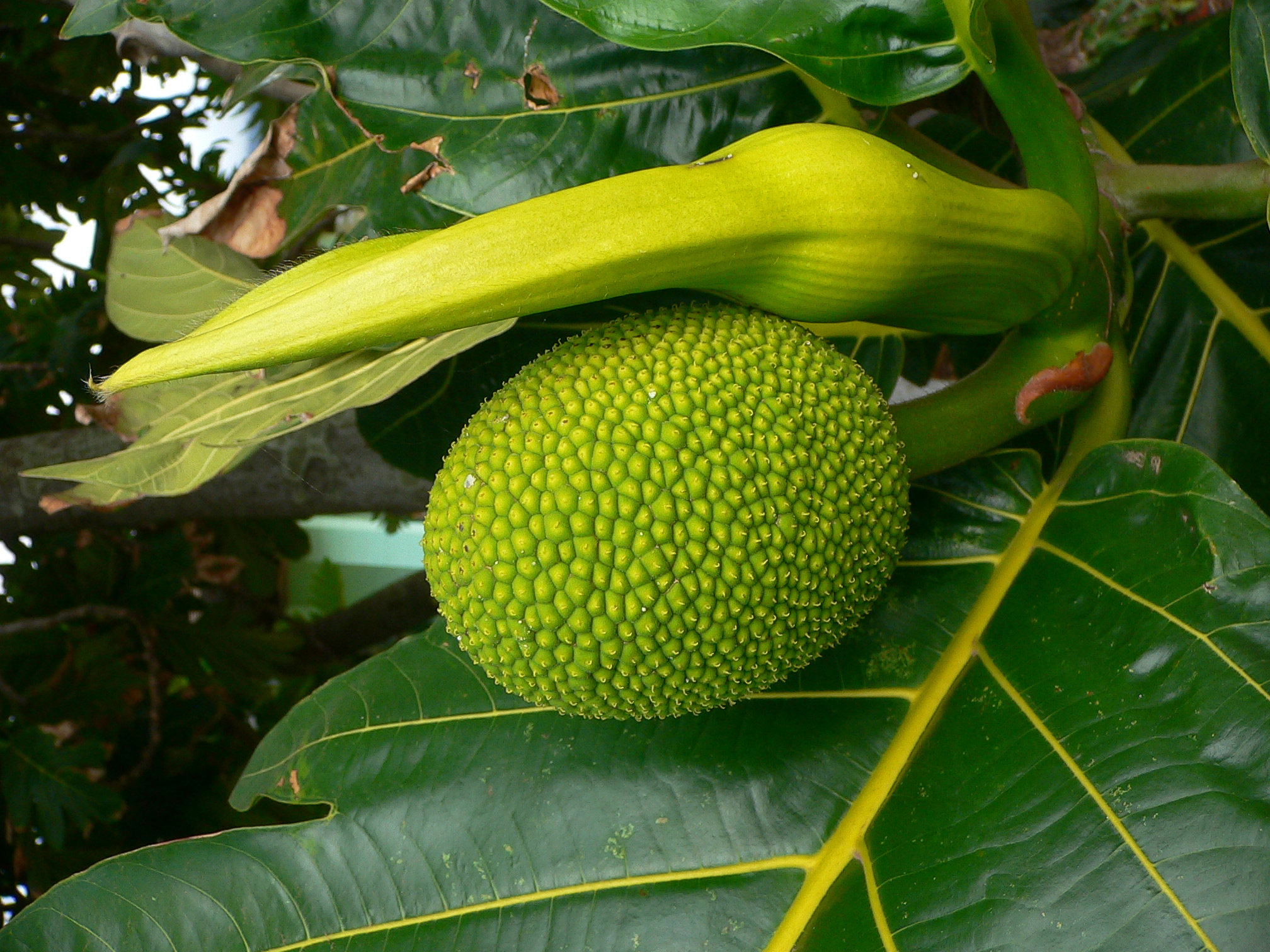
Photo credit: MNBG
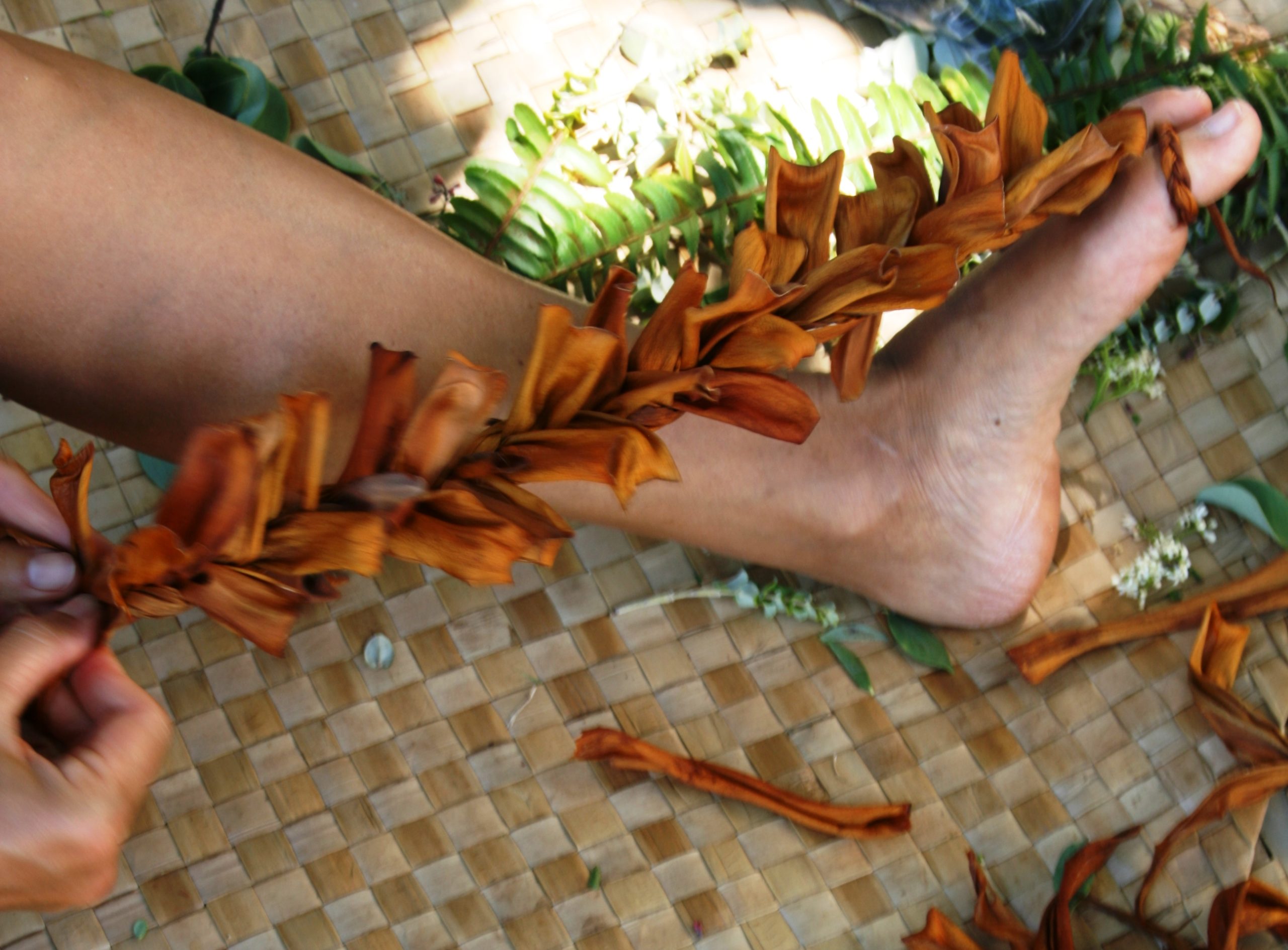
Photo credit: MNBG
Please Consider
Making a Donation

Plants from the MNBG Collection:
- ‘A‘ali‘i (Dodonaea viscosa)
- ‘Āhinahina (Achyranthes splendens var. splendens)
- ‘Āhinahina (Artemisia mauiensis)
- ‘Ākala (Rubus hawaiensis)
- ‘Ākia (Wikstroemia uva-ursi var. uva-ursi)
- ‘Akoko (Euphorbia degeneri)
- Alahe'e (Psydrax odorata)
- ‘Ānapanapa (Colubrina asiatica)
- ‘Awa (Piper methysticum)
- Hala (Pandanus tectorius)
- Hala pepe (Dracaena auwahiensis)
- Hau (Hibiscus tileaceus)
- Hō‘awa (Pittosporum glabrum)
- Hō‘awa (Pittosporum hosmeri)
- ‘Iliahi (Santalum haleakalae)
- ʻIlima papa (Sida fallax)
- Kalo, (Colocasia esculenta)
- Kamani (Callophyllum inophyllum)
- Koa (Acacia koa)
- Koai‘a (Acacia koaia)
- Koki‘a, Hau hele ‘ula (Kokia drynarioides)
- Koki‘o ke‘o ke‘o (Hibiscus arnottianus subsp. arnottianus)
- Koki‘o ke‘oke‘o (Hibiscus arnottianus subsp. immaculatus)
- Koki‘o ‘ula‘ula (Hibiscus kokio ssp. kokio)
- Koki‘o ‘ula‘ula (Hibiscus kokio ssp. saintjohnnianus)
- Koki‘o ke‘o ke‘o (Hibiscus waimeae ssp. waimeae)
- Kou (Cordia subcordata)
- Kukui (Aleurites moluccana)
- Loulu lelo (Pritchardia hillebrandii)
- Loulu (Pritchardia remota)
- Maʻo (Gossypium tomentosum)
- Ma‘o hau hele (Hibiscus brackenridgei)
- Māmaki (Pipturus albidus)
- Mau‘u lā‘ili (Sisyrinchium acre)
- Milo (Thespesia populnea)
- Naio (Myoporum sandwicense)
- Nānū (Gardenia brighamii)
- Ōhai (Sesbania tomentosa)
- ʻŌhiʻa ʻai (Syzygium malaccense)
- ‘Ōhia lehua (Metrosideros polymorpha)
- Pōhinahina (Vitex rotundifolia)
- Pōkalakala (Polyscias racemosa)
- ‘Uala (Sweet Potato)
- ‘Uki ‘uki (Dianella sandwicensis)
- ʻUlu cv. ‘Maʻafala’(Artocarpus altilis)
- Wauke (Broussonetia papyrifera)
- Wiliwili (Erythrina sandwicensis)
