MNBG Calendar
Events & Workshops 2026
First Friday Plant Giveaways
Every first Friday
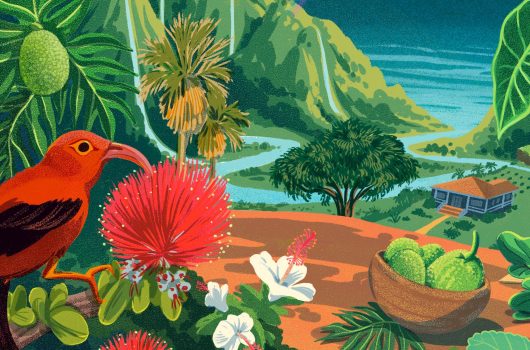
Plants are available on a first come, first serve basis. No holds allowed. This event is for residents only and you must be present to claim your free plant. Visit our socials (@mauinuibg or facebook.com/mauinuibg) to see the plant(s) of the month. When you arrive, please remember to park along the street. Our monthly plant giveaways are now partnered with Grow Aloha, and supported by a grant from the Kaulunani Urban and Community Forestry Program of the DLNR Division of Forestry and Wildlife; and State and Private Forestry branch of the US Forest Service, Region 5.
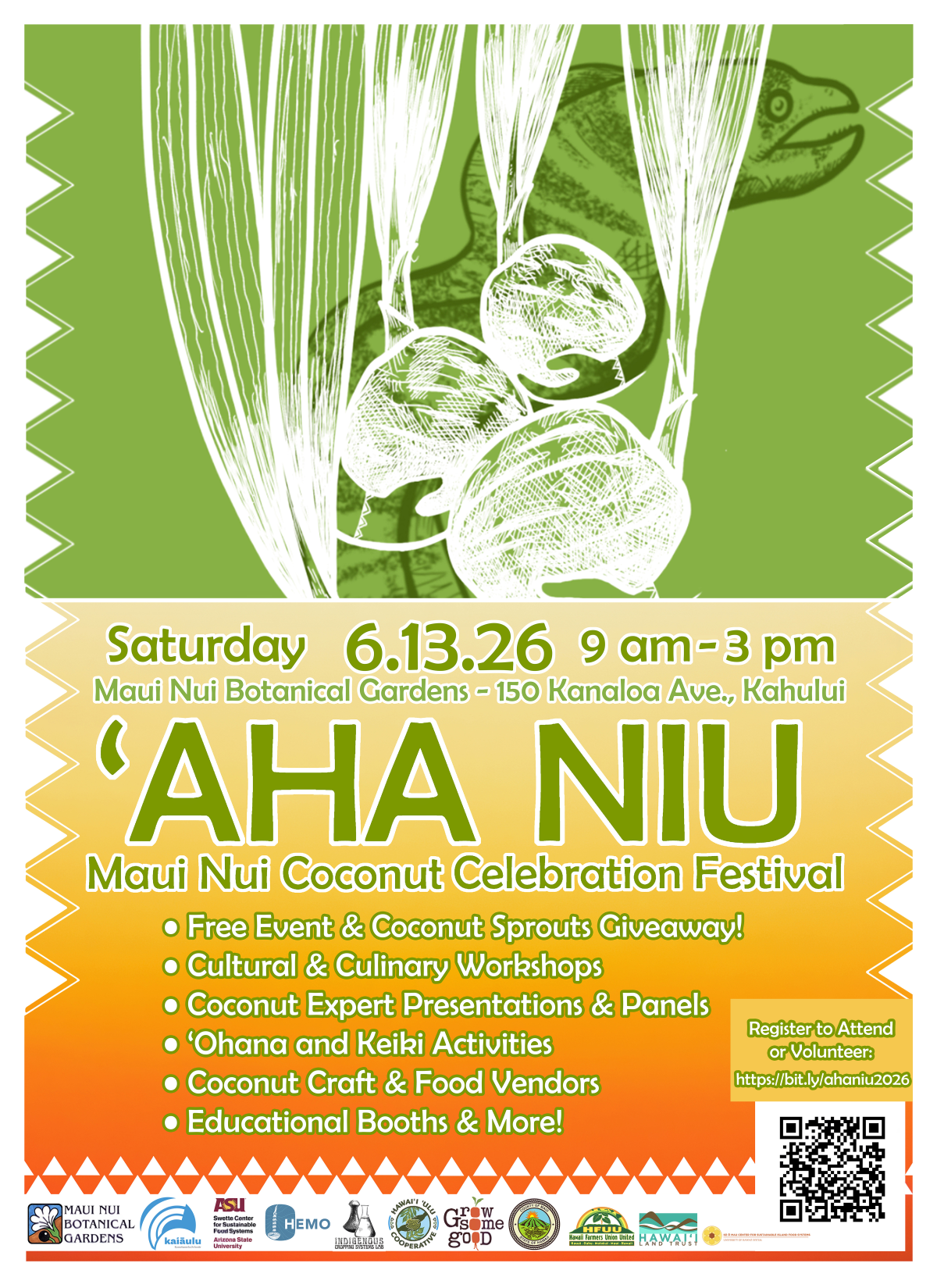
Hosted by Maui Nui Botanical Gardens together with ASU Swette Center, Kamehameha Schools, HEMO and community partners, this FREE family-friendly, community gathering is dedicated to celebrating, revitalizing, and protecting niu (coconut) across Maui Nui.
Includes niu sprout give-aways (while supplies last); hands-on niu workshops led by cultural practitioners; pāpale lau niu; food processing basics; kanu niu; presentations and talk story with coconut industry experts; and information on Coconut Rhinoceros Beetle (CRB) identification and mitigation.
Registration is required as space is limited. No fees to attend.
Sunday, August 1st, 8am - 3pm
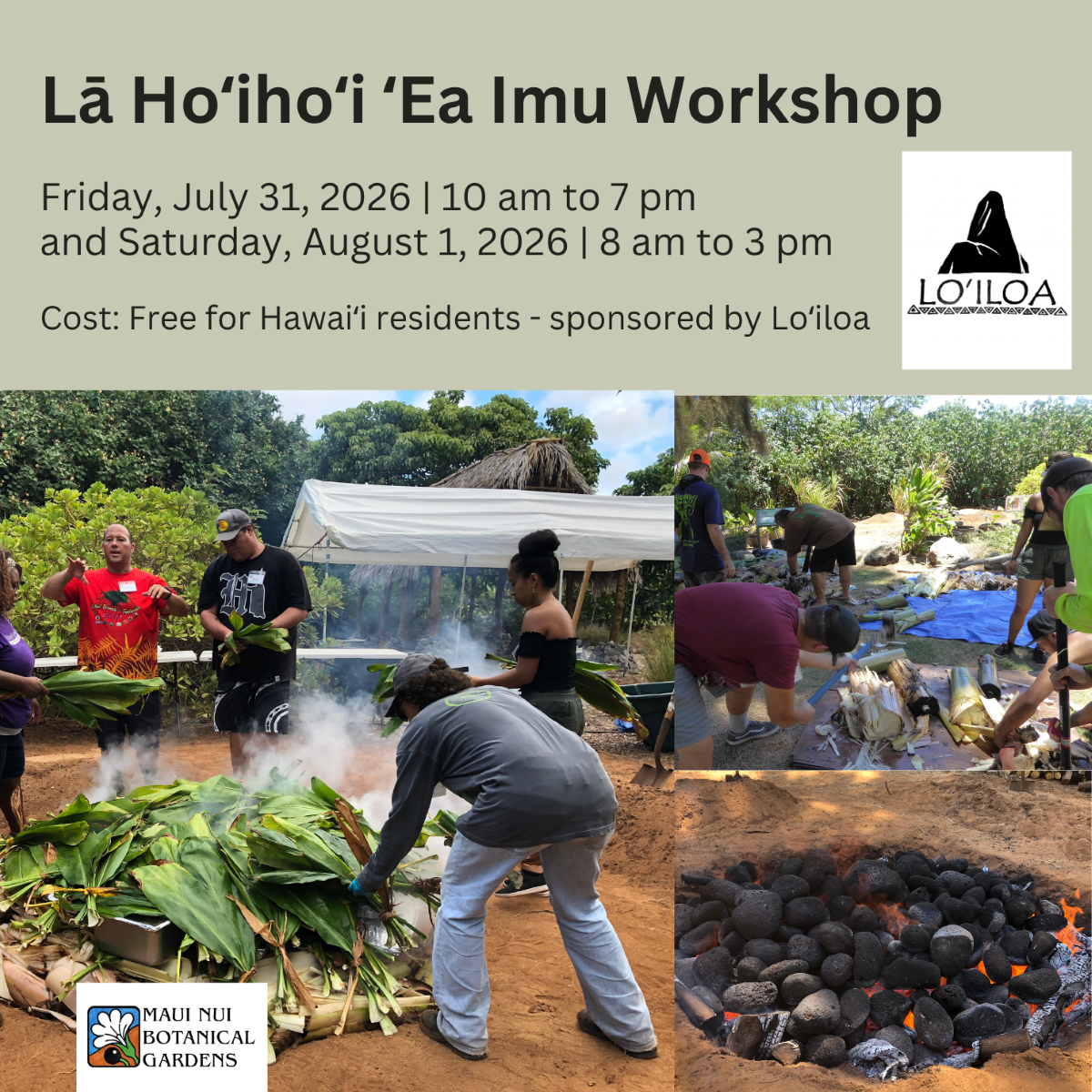
Experience the tradition, skill, and community of imu cooking at this two-day immersive workshop. This hands-on program invites participants to learn about cooking with an imu, the traditional Hawaiian underground oven.
Throughout the workshop, participants will receive guided instruction in planning, preparing, building, and cooking with an imu while gaining a deeper appreciation for the cultural significance, practical uses, and sustainability of this traditional Hawaiian cooking method. Whether you are new to imu cooking or looking to strengthen your experience, this workshop offers a rare opportunity to learn by doing.
The workshop will be led by Chris “Ikaika” Nakahashi of Haʻikū, Maui, Lecturer of Hawaiian Ethnobotany at the University of Hawaiʻi Maui College. Deeply committed to education and traditional Hawaiian food practices, Ikaika has trained in and practiced imu cooking throughout the Hawaiian Islands and brings years of knowledge, experience, and passion to this workshop.
Admission: Free for Hawaiʻi residents, sponsored by Loʻiloa
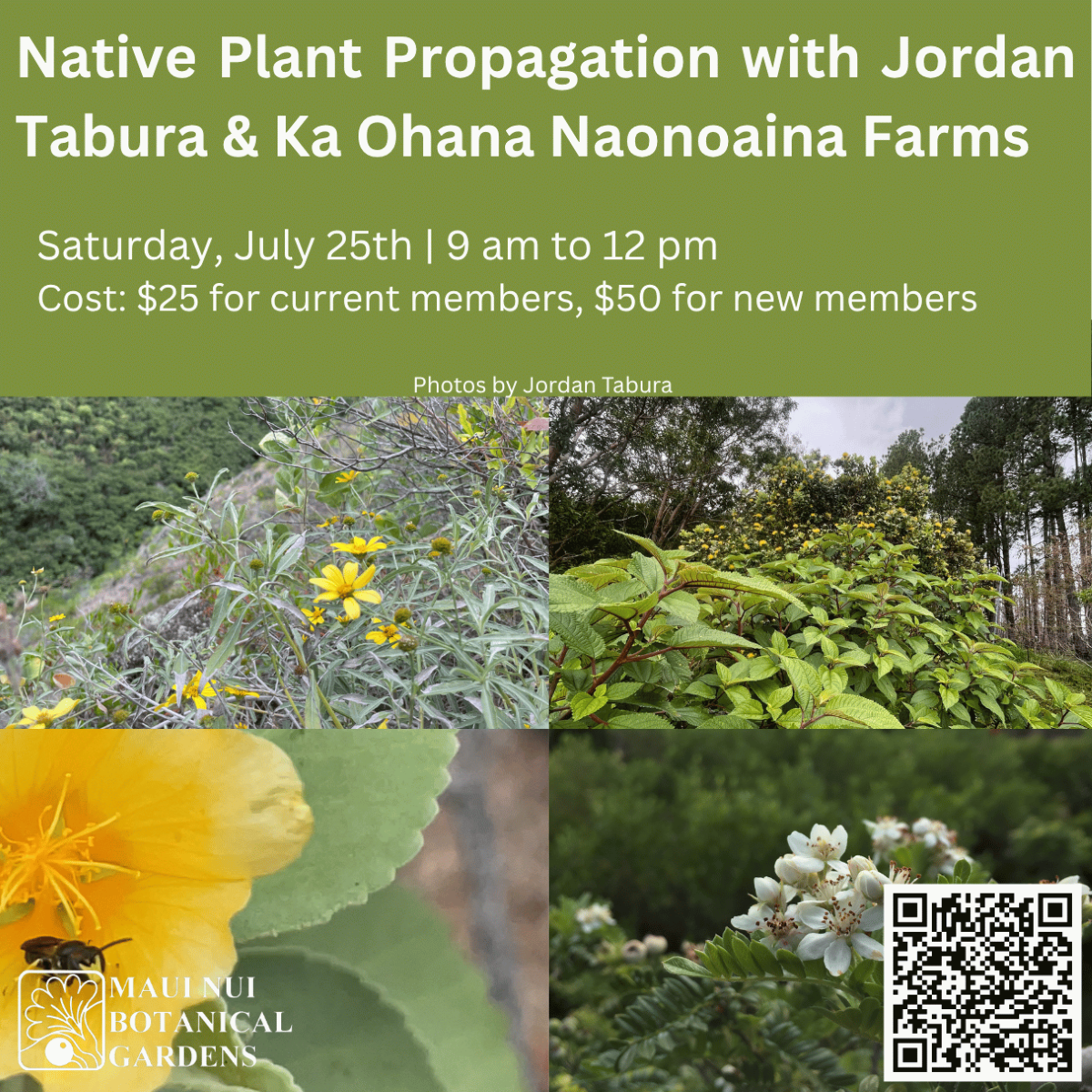
Join Jordan & Ka Ohana o Naonoaina Farms for a hands-on propagation workshop. They believe that when people invest time and energy into growing native plants, they are more likely to carry that knowledge forward, strengthening conservation efforts and inspiring more native plant growers and community nurseries across Hawai’i. The focus will be on ʻIlima Sida fallax, Māmaki Pipturus albidus, Koʻokoʻolau Bidens hillebrandiana, ʻUlei Osteomeles anthyllidifolia, & Nehe Wollastonia lavarum. Participants will gain experience with propagation techniques, including seed germination and rooting, while learning the care required for each species to thrive. Participants will take home at least one species, if not more. Jordan will discuss the differences between growing plants for conservation and landscape use, the importance of preserving island and watershed genetics in restoration work, and best practices for plant health and treatment protocols that meet watershed and conservation standards.
Cost: $25 for members, $50 for non-members
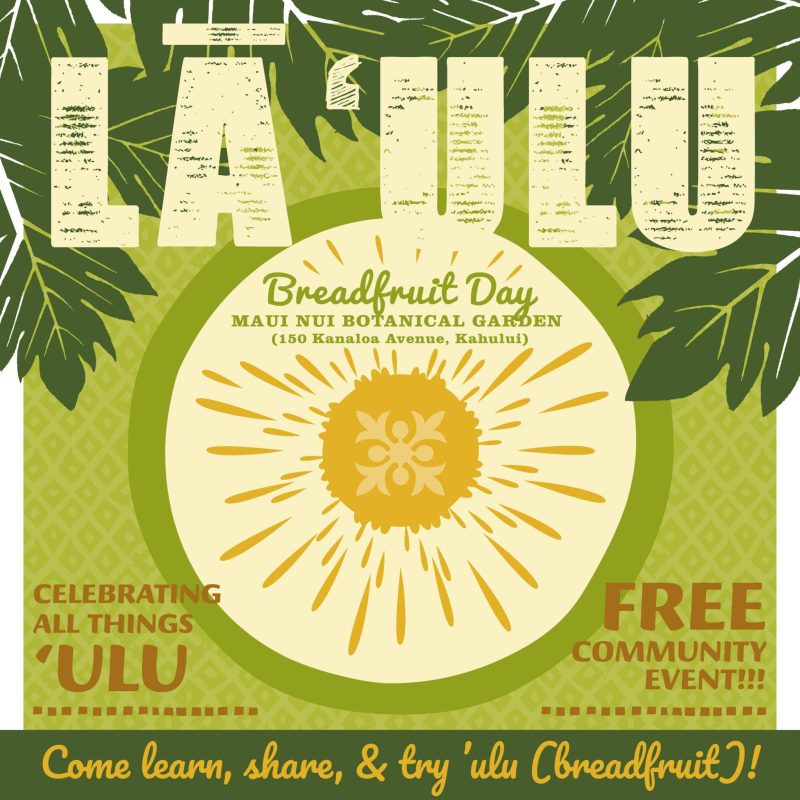
Celebrate the rich cultural and culinary legacy of ʻulu at Lā ʻUlu Breadfruit Festival, hosted by Maui Nui Botanical Gardens on Saturday, September 6th from 9am to 2pm in Kahului. Join us for presentations, food, craft vendors, and entertainment, all centered around ʻulu.
Admission: Free
Cancellations (paid workshops): Space is limited and registering without payment does not guarantee a spot. Once paid registration is full, MNBG will accept unpaid registrations in the order they are received to place you on a waitlist. Refunds for cancellations will be given only if you call 249-2798 to inform us of the cancellation at least seven days before the workshop begins. No-shows and cancellations less than one week before a workshop will forfeit registration and membership fees. However, if a waitlist registrant pays for a forfeited spot less than one week before the workshop begins, MNBG will refund registration fees in the order in which they were forfeited. Mahalo for your understanding.
Cancellations (free workshops): Space is limited, so if you need to cancel please call us at 249-2798 to free space for others to register.
Location
The Garden is located at 150 Kanaloa Avenue in Kahului, Maui, right across from the War Memorial Stadium.
(808) 249-2798
Hours of Operation
Tuesday through Saturday,
8:00 a.m. – 4:00 p.m.
Closed occasionally for inclement weather and Hawaii State Holidays.
Admission
Members: Free
General: $10
Keiki Under 12: Free
Kama'aina: Free
(with Hawai'i ID)
Please Consider
Making a Donation