Hala (Pandanus tectorius)
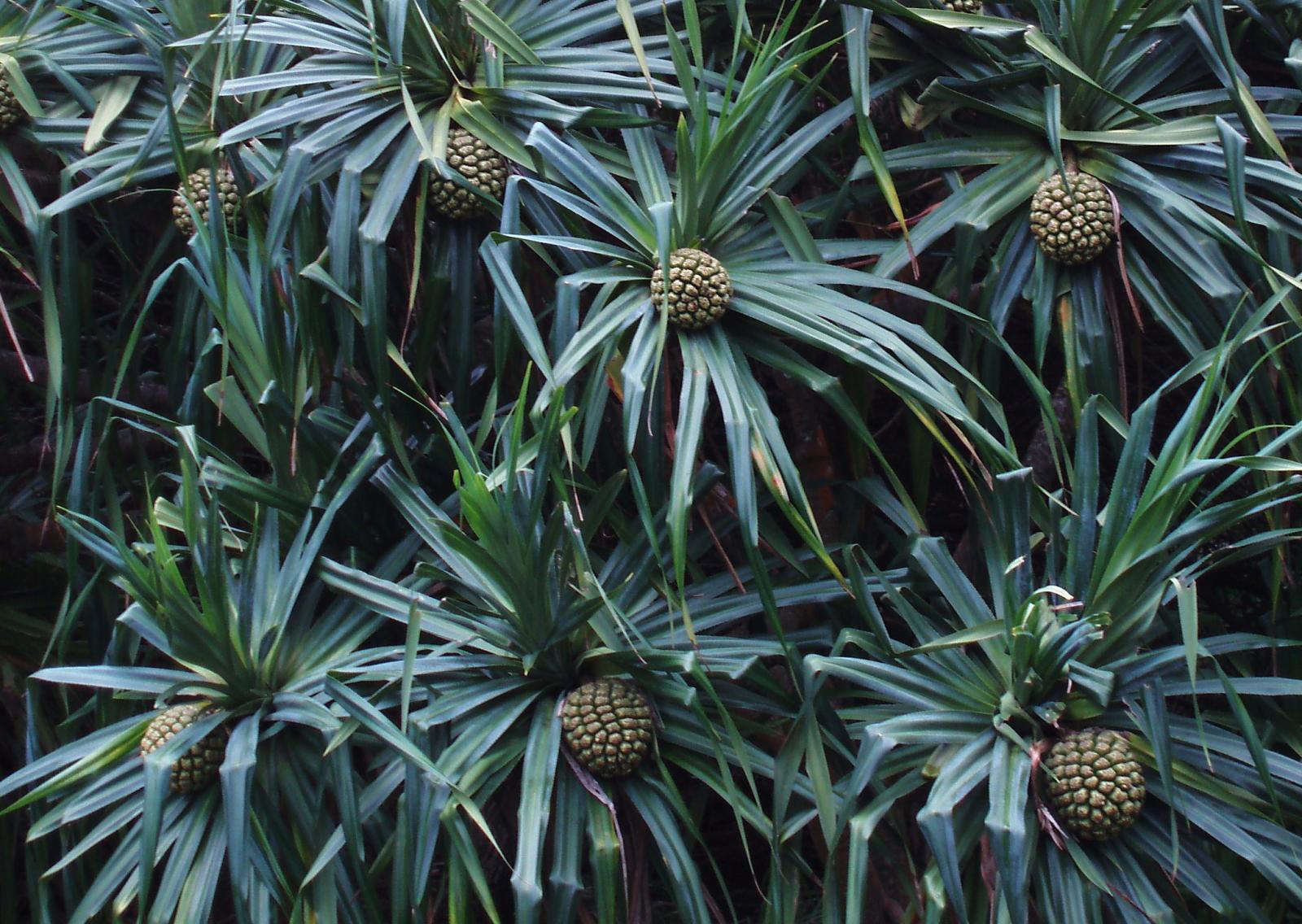
Photo courtesy of Jupiter Nielsen
Hawaiian name: Hala
Botanical name: Pandanus tectorius
Family: Pandanaceae (Screwpine Family)
Status: Indigenous
Where found: All Hawaiian islands except Kaho‘olawe (HI exc. Ka)
Water/Light: Dry, with full to part sunlight
Elevation range: 0 to 2,000 feet
Height: 25-30 feet, with a 20 foot spread
Hala leaves (lau hala) are exceptional for weaving mats, hats, roof thatching, canoe sails, baskets, sandals (kāma‘a), fans and so much more. In Hawai‘i, the preparation of lau hala was done only by women. The fruit of the female hala tree can be made into striking yellow to deep-orange lei. Hawaiian custom notes that these lei are given only in times when a person advances from one significant level of life to the next, including graduations, weddings and funerals. Hala is an excellent landscape tree for poor, salty or sandy soils in hot and windy areas. It can stabilize sandy soil along coastal properties, where salt spray may kill most other plants. The wood from male trees is said to be harder and is used in hale construction, canoe rollers, and occasionally for bowls.
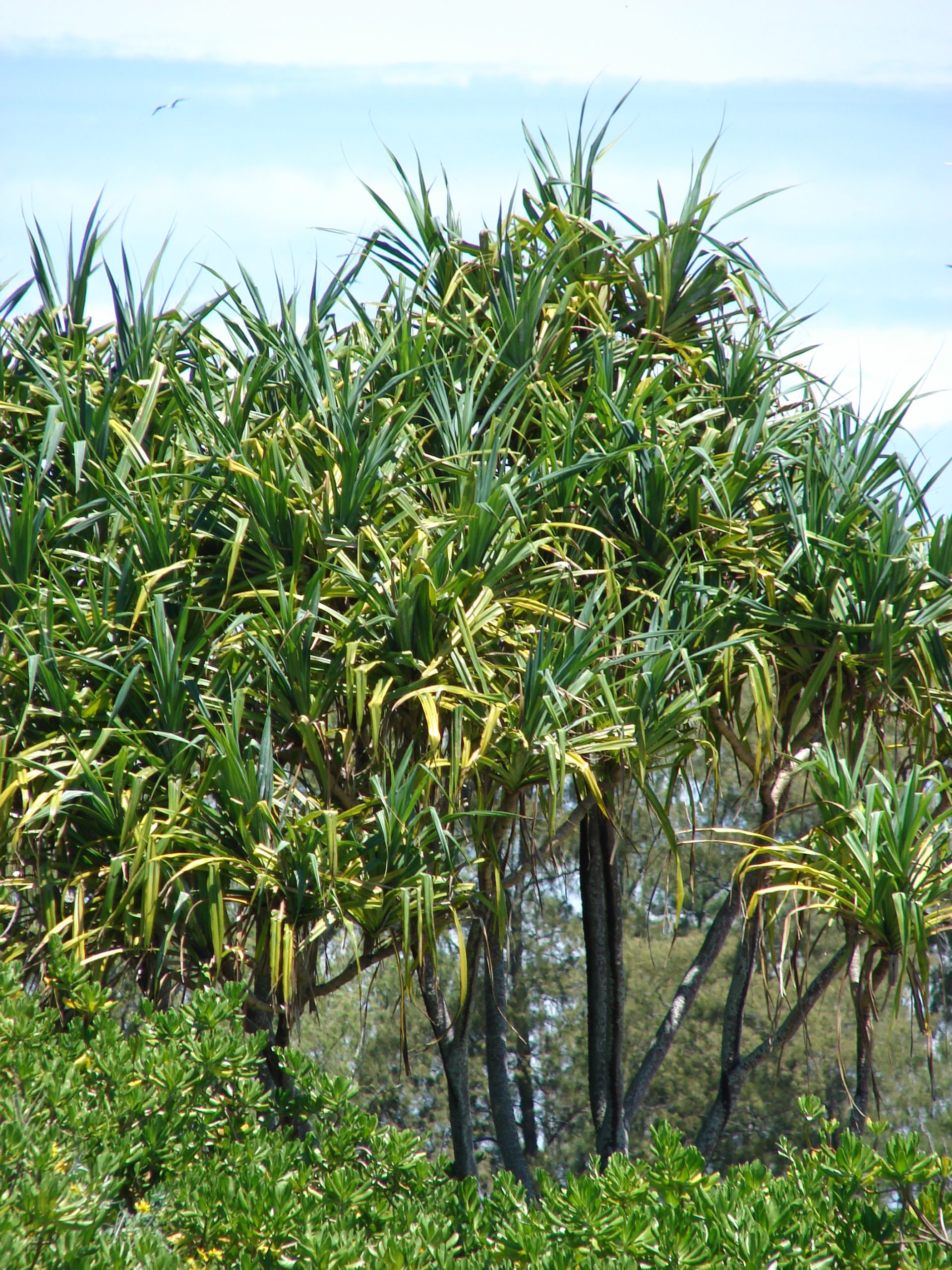
Photo credit: Forest and Kim Starr
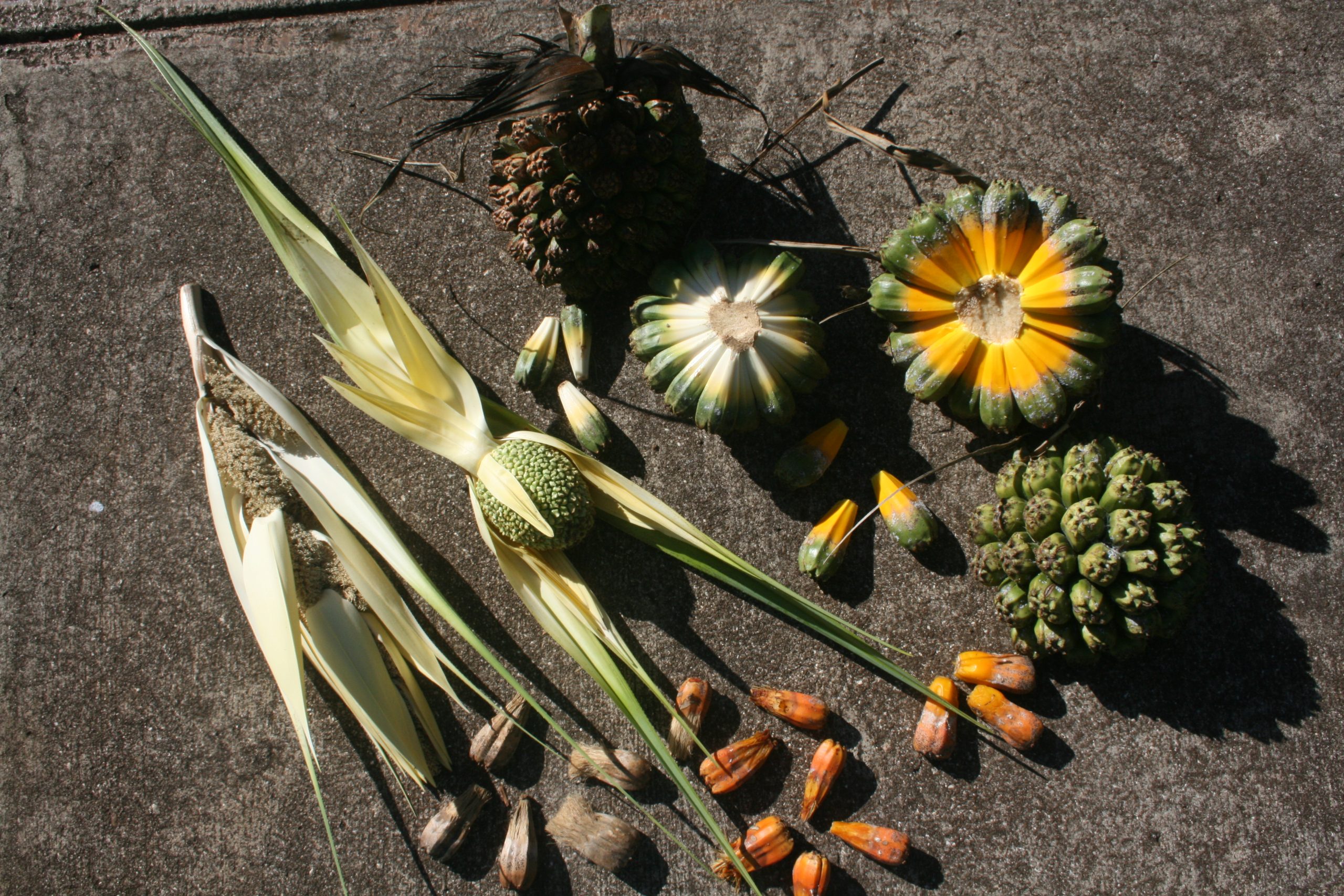
Photo credit: MNBG
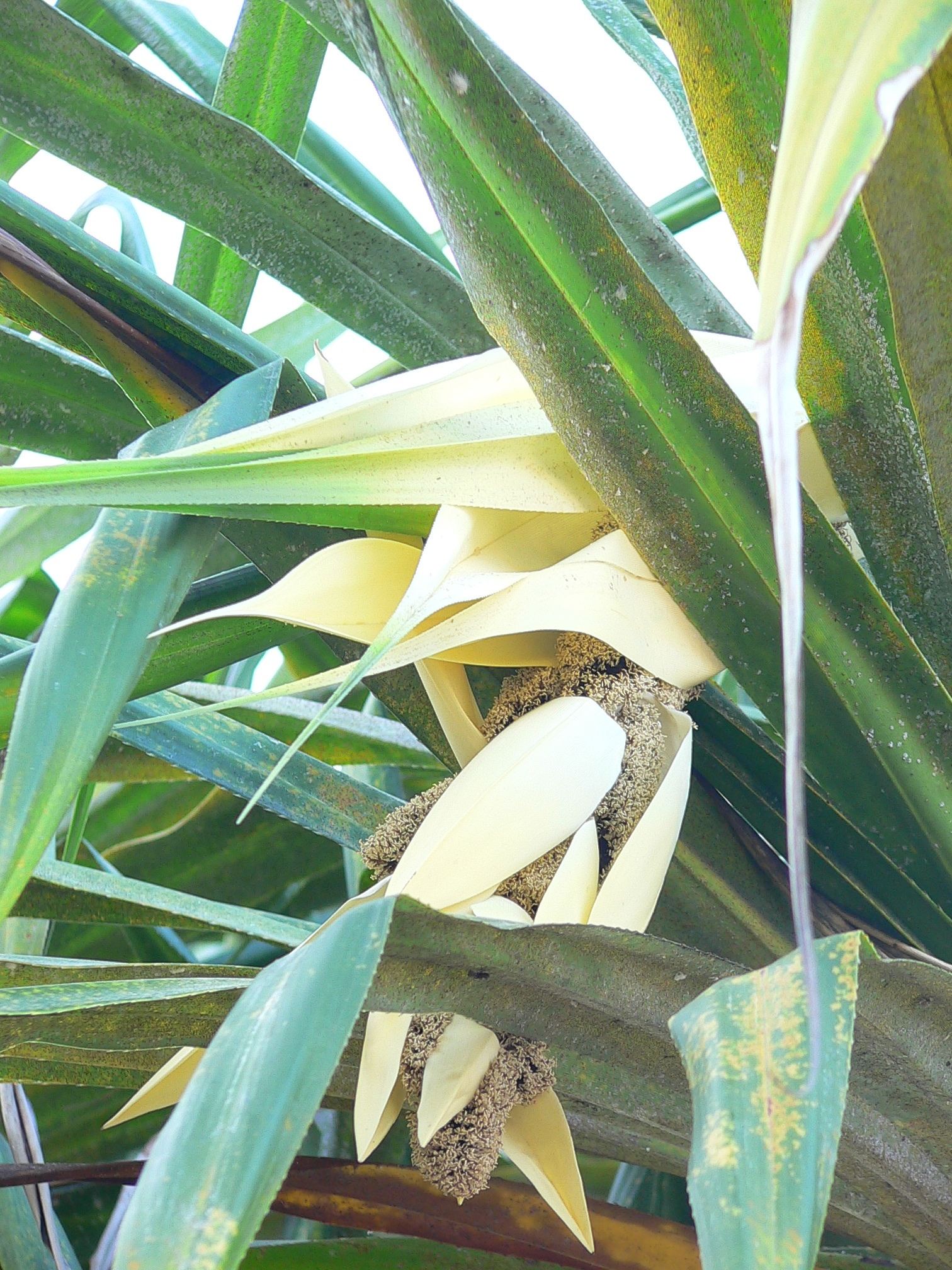
Photo credit: MNBG
Please Consider
Making a Donation

Plants from the MNBG Collection:
- ‘A‘ali‘i (Dodonaea viscosa)
- ‘Āhinahina (Achyranthes splendens var. splendens)
- ‘Āhinahina (Artemisia mauiensis)
- ‘Ākala (Rubus hawaiensis)
- ‘Ākia (Wikstroemia uva-ursi var. uva-ursi)
- ‘Akoko (Euphorbia degeneri)
- Alahe'e (Psydrax odorata)
- ‘Ānapanapa (Colubrina asiatica)
- ‘Awa (Piper methysticum)
- Delissea rhytidosperma
- Hāhā (haha) (Cyanea magnicalyx)
- Hala (Pandanus tectorius)
- Hala pepe (Dracaena auwahiensis)
- Hau (Hibiscus tileaceus)
- Hau hele wai (‘Akiohala) (Hibiscus furcellatus)
- Hao (Rauvolfia sandwicensis)
- Hō‘awa (Pittosporum glabrum)
- Hō‘awa (Pittosporum hosmeri)
- ‘Iliahi (Santalum haleakalae)
- ‘Iliahialo‘e (Santalum ellipticum)
- ʻIlima papa (Sida fallax)
- Kalo, (Colocasia esculenta)
- Kamani (Callophyllum inophyllum)
- Kī (Cordyline fruticosa)
- Koa (Acacia koa)
- Koai‘a (Acacia koaia)
- Koki‘a, Hau hele ‘ula (Kokia drynarioides)
- Koki‘o ke‘o ke‘o (Hibiscus arnottianus)
- Koki‘o ke‘oke‘o (Hibiscus arnottianus subsp. immaculatus)
- Koki‘o ‘ula‘ula (Hibiscus kokio ssp. kokio)
- Koki‘o ‘ula‘ula (Hibiscus kokio ssp. saintjohnnianus)
- Koki‘o ke‘o ke‘o (Hibiscus waimeae ssp. waimeae)
- Kou (Cordia subcordata)
- Kukui (Aleurites moluccana)
- Loulu lelo (Pritchardia hillebrandii)
- Loulu (Pritchardia remota)
- Maʻo (Gossypium tomentosum)
- Ma‘o hau hele (Hibiscus brackenridgei)
- Māmaki (Pipturus albidus)
- Mau‘u lā‘ili (Sisyrinchium acre)
- Mehame, Hame (Antidesma platyphyllum var. platyphyllum)
- Milo (Thespesia populnea)
- Naio (Myoporum sandwicense)
- Nānū (Gardenia brighamii)
- Ōhai (Sesbania tomentosa)
- ʻŌhiʻa ʻai (Syzygium malaccense)
- ‘Ōhia lehua (Metrosideros polymorpha)
- Pōhinahina (Vitex rotundifolia)
- Pōkalakala (Polyscias racemosa)
- ‘Uala (Sweet Potato)
- ‘Uki ‘uki (Dianella sandwicensis)
- ʻUlu cv. ‘Maʻafala’(Artocarpus altilis)
- Wauke (Broussonetia papyrifera)
- Wiliwili (Erythrina sandwicensis)
