Kamani (Calophyllum inophyllum)
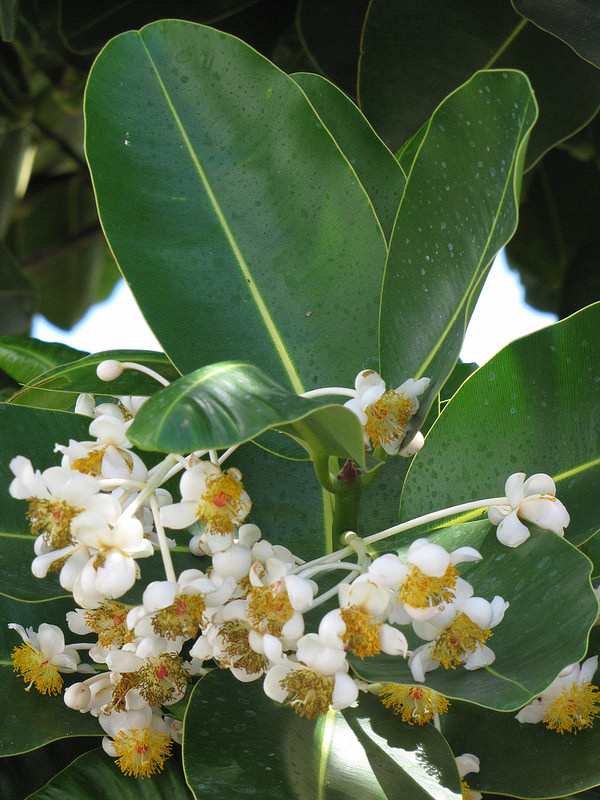
Photo courtesy of Forest & Kim Starr
Hawaiian name: Kamani
Botanical name: Calophyllum inophyllum
Family: Calophyllaceae
Status: Polynesian-introduced
Where naturalized: Maui, Moloka‘i, Hawai‘i, O‘ahu & Kaua‘i K/ O/ Mo/ M/ H
Water/Light: Dry to moist, with full sun exposure
Elevation range: Coastal and low elevation
Height: 25 to 65 feet, with a 40 foot spread
Kamani was brought to Hawai‘i by early Polynesian settlers and is widespread across the tropics. The beautiful wood was fashioned into many objects including wa‘a (canoes), ‘umeke (containers or bowls), or pā kamani (trays). There is no bitter taste or odor to kamani wood, making it preferred for use as food vessels. The fruit husk yields a brownish-mauve kapa dye. Kamani seeds produce oil that was burned for light and useful in waterproofing kapa (cloth); seeds and oil are not edible. The exocarps (woody part of the fruit) are made into whistles called oeoe, and into lei. Kamani flowers smell similar to orange blossoms. Flowers and sap were used to give fragrance to newly pounded kapa cloth. In lāʻau lapaʻau (Hawaiian medicine), the bark resin of kamani was used to treat ulcers. This tree casts a heavy shade, so is not suitable for planting underneath. It is very wind and salt tolerant, tolerates occasional inundation and pruning, and grows well in poor soils. If planting over a sidewalk or lawn, the round golf ball sized seeds must be cleaned up in season to reduce slipping hazards. Fruiting is from April-June and again in October-December.
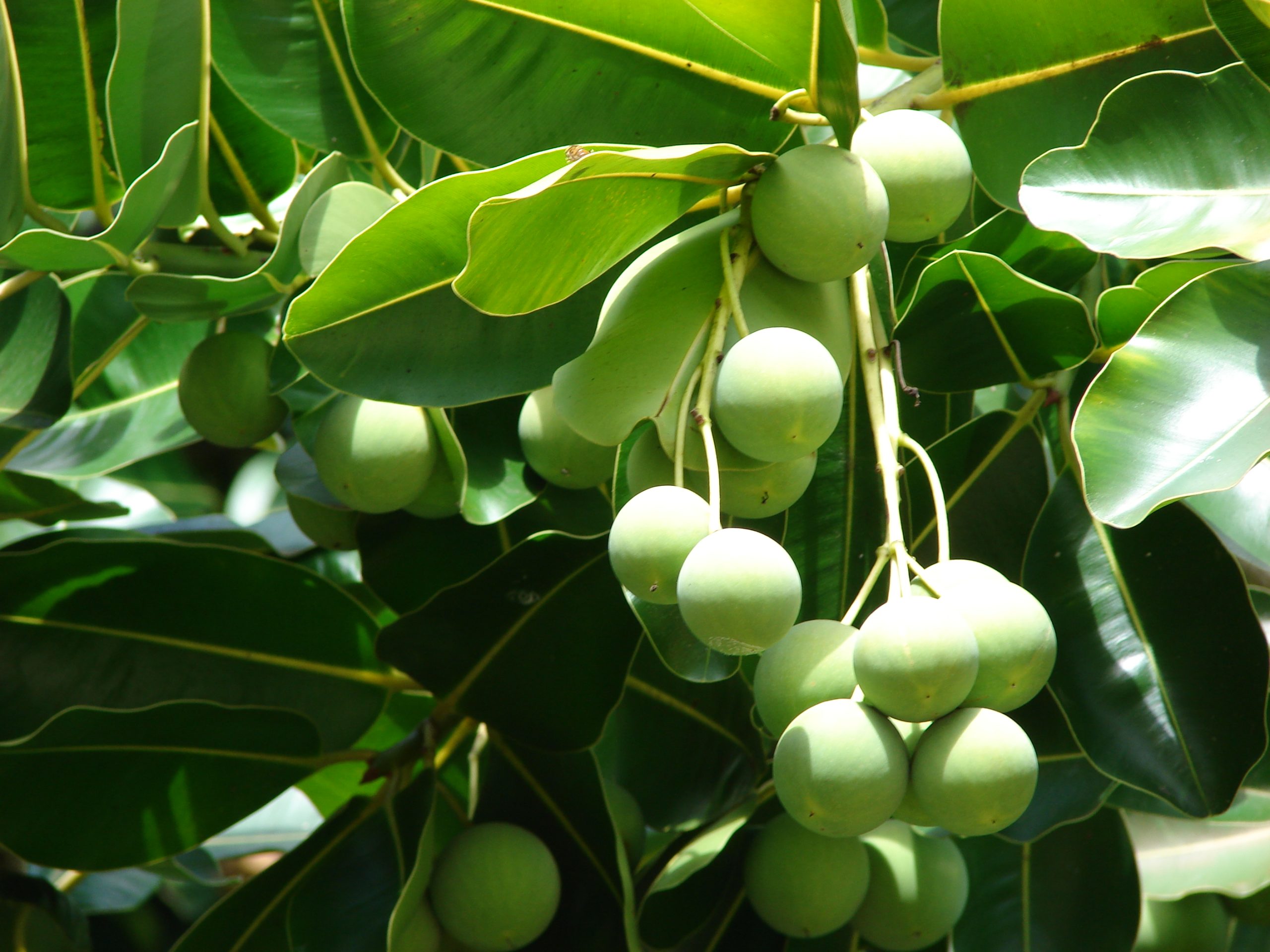
Photo credit: Forest and Kim Starr
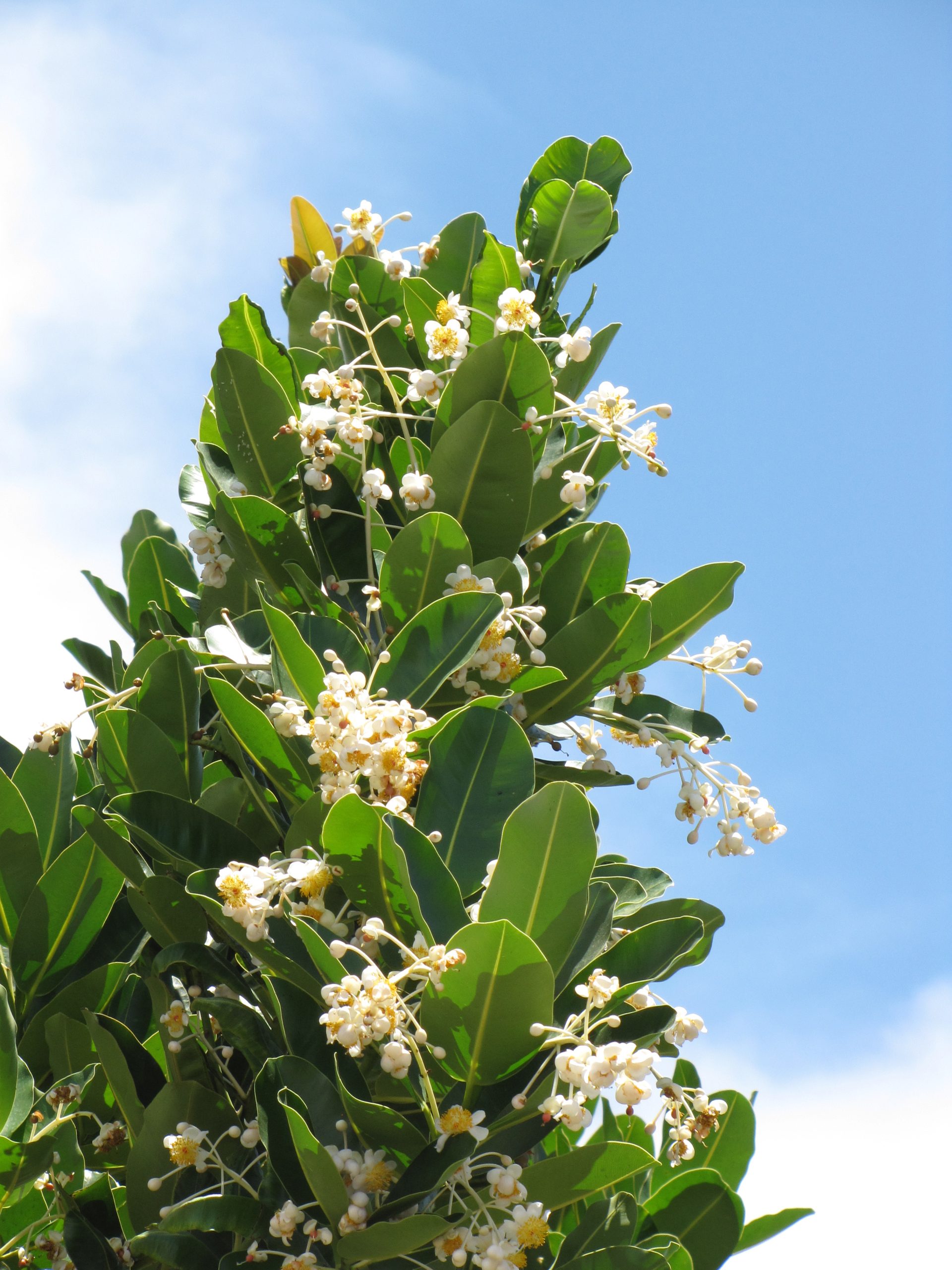
Photo credit: Forest and Kim Starr
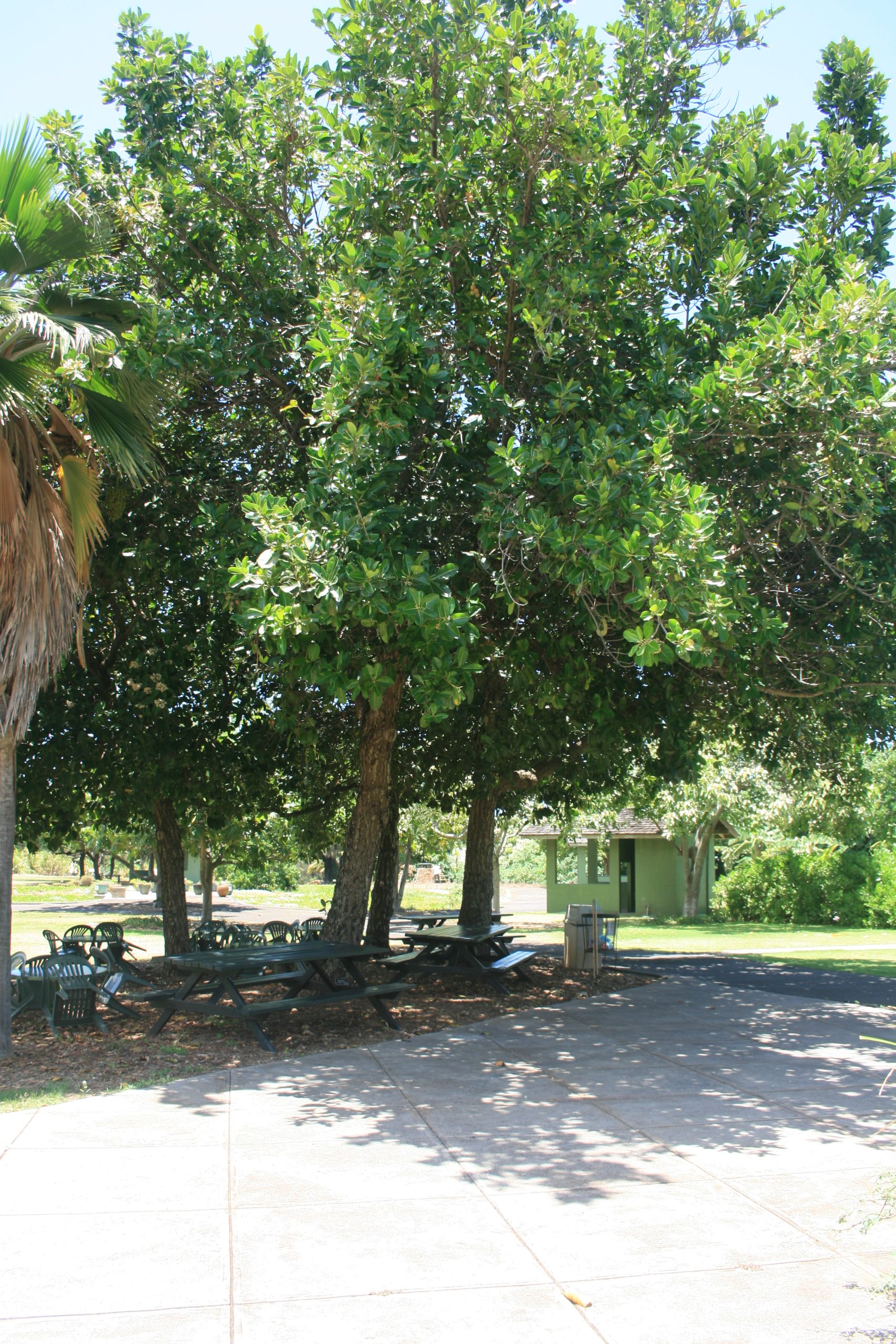
Photo credit: MNBG
Please Consider
Making a Donation

Plants from the MNBG Collection:
- ‘A‘ali‘i (Dodonaea viscosa)
- ‘Āhinahina (Achyranthes splendens var. splendens)
- ‘Āhinahina (Artemisia mauiensis)
- ‘Ākala (Rubus hawaiensis)
- ‘Ākia (Wikstroemia uva-ursi var. uva-ursi)
- ‘Akoko (Euphorbia degeneri)
- Alahe'e (Psydrax odorata)
- ‘Ānapanapa (Colubrina asiatica)
- ‘Awa (Piper methysticum)
- Delissea rhytidosperma
- Hāhā (haha) (Cyanea magnicalyx)
- Hala (Pandanus tectorius)
- Hala pepe (Dracaena auwahiensis)
- Hau (Hibiscus tileaceus)
- Hau hele wai (‘Akiohala) (Hibiscus furcellatus)
- Hao (Rauvolfia sandwicensis)
- Hō‘awa (Pittosporum glabrum)
- Hō‘awa (Pittosporum hosmeri)
- ‘Iliahi (Santalum haleakalae)
- ‘Iliahialo‘e (Santalum ellipticum)
- ʻIlima papa (Sida fallax)
- Kalo, (Colocasia esculenta)
- Kamani (Callophyllum inophyllum)
- Kī (Cordyline fruticosa)
- Koa (Acacia koa)
- Koai‘a (Acacia koaia)
- Koki‘a, Hau hele ‘ula (Kokia drynarioides)
- Koki‘o ke‘o ke‘o (Hibiscus arnottianus)
- Koki‘o ke‘oke‘o (Hibiscus arnottianus subsp. immaculatus)
- Koki‘o ‘ula‘ula (Hibiscus kokio ssp. kokio)
- Koki‘o ‘ula‘ula (Hibiscus kokio ssp. saintjohnnianus)
- Koki‘o ke‘o ke‘o (Hibiscus waimeae ssp. waimeae)
- Kou (Cordia subcordata)
- Kukui (Aleurites moluccana)
- Loulu lelo (Pritchardia hillebrandii)
- Loulu (Pritchardia remota)
- Maʻo (Gossypium tomentosum)
- Ma‘o hau hele (Hibiscus brackenridgei)
- Māmaki (Pipturus albidus)
- Mau‘u lā‘ili (Sisyrinchium acre)
- Mehame, Hame (Antidesma platyphyllum var. platyphyllum)
- Milo (Thespesia populnea)
- Naio (Myoporum sandwicense)
- Nānū (Gardenia brighamii)
- Ōhai (Sesbania tomentosa)
- ʻŌhiʻa ʻai (Syzygium malaccense)
- ‘Ōhia lehua (Metrosideros polymorpha)
- Pōhinahina (Vitex rotundifolia)
- Pōkalakala (Polyscias racemosa)
- ‘Uala (Sweet Potato)
- ‘Uki ‘uki (Dianella sandwicensis)
- ʻUlu cv. ‘Maʻafala’(Artocarpus altilis)
- Wauke (Broussonetia papyrifera)
- Wiliwili (Erythrina sandwicensis)
